
 Available in US
Cricket Betting Markets: Every Bet Type Explained for Maximum Profit
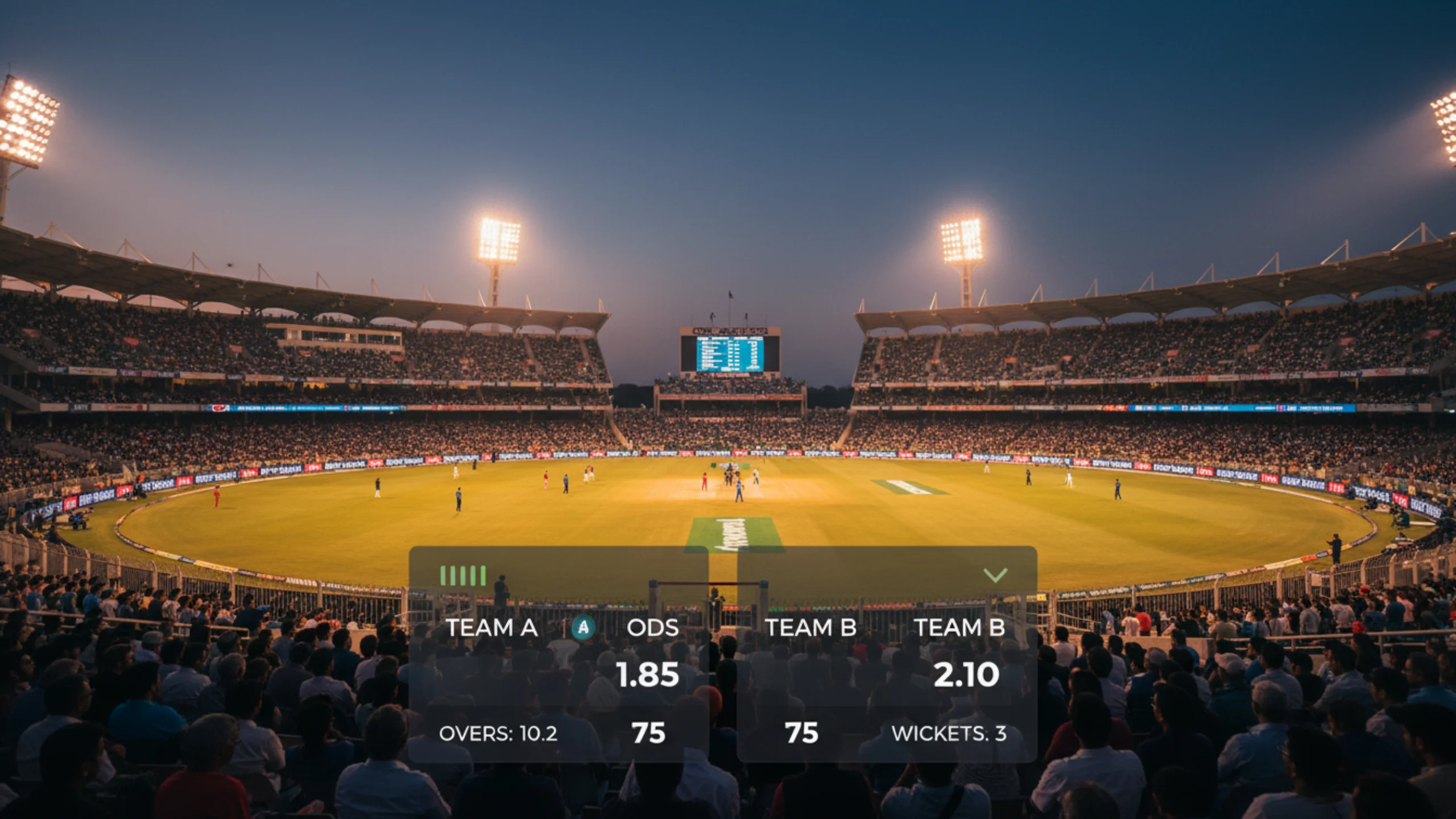
Walk into any modern sportsbook offering cricket and you’ll find yourself facing an almost overwhelming array of options. Match winner sits at the top, familiar and straightforward. But scroll down and the list keeps growing. Top batsman. Top bowler. Total runs. First innings score. Method of dismissal. Man of the match. Highest opening partnership. Runs in the first over. The variety seems endless, each market offering a different angle on the same cricket match.
This proliferation isn’t accidental. Cricket’s structure generates betting opportunities that most sports simply cannot match. Every ball creates a discrete event with quantifiable outcomes. Every innings produces statistics that can be predicted, compared, and wagered upon. Where a football match offers perhaps a dozen betting markets, a single IPL fixture might present over two hundred. The sport is practically designed for betting diversity.
Yet quantity doesn’t automatically translate into quality opportunities. Many of these markets exist primarily to part casual bettors from their money through inflated margins and unpredictable outcomes. Knowing which markets reward skill versus which reward luck—and understanding where bookmaker weaknesses create exploitable edges—separates successful cricket bettors from the masses feeding bookmaker profits.
What follows is a comprehensive examination of cricket betting markets. Not just what they are, but how they behave, where value tends to hide, and which markets suit different betting approaches and knowledge bases. Whether you prefer the straightforward satisfaction of match betting or the analytical challenge of player props, there’s substance here to sharpen your approach.
Match Winner and Moneyline Cricket Betting Markets

The match winner market, often called moneyline betting, represents the foundational cricket wager. You’re picking which team wins. Nothing more complicated than that. The simplicity makes it accessible to beginners while the market’s liquidity and competitive pricing attract serious money from professionals.
In T20 and ODI formats, match winner operates as a two-way market. One team wins, one team loses—draws are mathematically impossible when both sides complete their innings. This binary outcome structure creates clean win-or-lose propositions without the complicating third option that haunts certain football markets.
Test cricket introduces that third option. Matches can end in draws after five days without producing a winner. This transforms match winner into a three-way market where you’re choosing between Team A, Team B, or Draw. The draw option significantly affects pricing dynamics, often offering value that casual bettors overlook because backing nobody to win feels unsatisfying.
Bookmaker margins on match winner markets tend to be among the lowest available in cricket betting. High liquidity and intense competition between sportsbooks compress margins to sometimes below three percent on major matches. This competitive pricing makes match winner attractive for volume betting—placing many bets where small edges compound into meaningful profit over time.
The market’s simplicity can be deceptive. Accurately predicting match winners requires synthesising vast amounts of information: team strength, recent form, head-to-head records, venue characteristics, pitch conditions, weather forecasts, squad compositions, and countless situational factors. The bet type is simple; the analysis supporting good decisions is anything but.
Match winner markets respond dramatically to in-game developments. The toss often triggers significant movement since batting first or second confers advantages depending on conditions. Early wickets during the match cause further price shifts. A star batsman’s dismissal might lengthen a team’s odds by thirty percent or more within minutes. Understanding these dynamics helps bettors time their entries for maximum value.
One strategic approach involves waiting for the toss before betting. Pre-toss prices build in uncertainty about which team bats first. Post-toss prices incorporate that information, sometimes creating value on the team that got the preferred outcome. This patient approach sacrifices some potential edge for reduced uncertainty.
Top Batsman and Top Bowler Markets
Player performance markets shift focus from team outcomes to individual achievements. Top batsman asks you to predict which player scores the most runs in a match or innings. Top bowler asks who takes the most wickets. These markets reward deep knowledge of player form, batting orders, and situational matchups that team-level analysis might miss.
Top batsman markets in limited-overs cricket typically feature all specialist batsmen from both teams, with odds reflecting batting position, recent form, and historical scoring patterns. Opening batsmen generally carry shorter odds because they face more deliveries—more opportunity means more runs on average. But lower-order batsmen who bat infrequently can occasionally produce big scores, offering substantial payouts for those who identify when conditions favour depth batting.
The market’s structure creates interesting dynamics. You’re not predicting whether a player scores runs—you’re predicting whether they score more runs than everyone else. A batsman might hit fifty and still lose the market to a teammate who made sixty. This comparative element adds complexity beyond simple run expectation.
Form matters enormously in these markets. A batsman averaging forty across his career but struggling through a poor patch might offer value if you believe regression toward career norms is imminent. Conversely, a player riding a hot streak might be overpriced if the market extrapolates recent performance beyond reasonable expectation.
Top bowler markets follow similar logic but with wickets replacing runs. The bowling equivalent of opening batsmen are new ball bowlers—those who bowl first typically with the hardest, most dangerous deliveries. These bowlers usually have more wicket-taking opportunities and thus shorter odds. Death bowlers who operate at the end of innings can also prove prolific, though their opportunities depend on match situations.
Conditions heavily influence these markets. A green, seaming pitch favours fast bowlers for wicket-taking potential. A dry, turning surface favours spinners. Reading pitch reports and understanding how different conditions affect different bowling types creates edge unavailable to bettors who ignore these factors.
Dead heat rules matter in player markets. When two players tie for most runs or wickets, most bookmakers divide payouts using dead heat calculations. Your stake effectively splits between the tied players, reducing returns. Understanding these rules prevents surprise when apparent winners produce lower payouts than expected.
Total Runs and Over-Under Markets

Total runs markets ask you to predict whether scoring exceeds or falls short of a specified line. The bookmaker sets a number—say 325.5 for a T20 match—and you bet on whether the actual combined total finishes over or under that line. The half-point ensures a definitive outcome; there’s no pushing when the total lands exactly on the number.
These markets reward understanding of venue characteristics, pitch behaviour, and team scoring tendencies. High-scoring grounds with short boundaries and flat pitches consistently produce different totals than seamer-friendly venues with longer dimensions. The same two teams might generate totals of 360 at one venue and 280 at another simply because conditions differ so dramatically.
Analysing historical data by venue provides foundation for total runs betting. What does this ground typically produce in T20 matches? How do scores differ between day games and night games at this venue? What happens when teams bat first versus chasing? Building venue profiles helps you identify when bookmaker lines deviate from historical norms.
Weather conditions influence totals through multiple mechanisms. Overcast conditions aid swing bowling, often suppressing scoring. Clear skies and hard pitches favour batsmen. Evening dew in subcontinental day-night matches can make bowling difficult in second innings, inflating totals beyond what first-innings performance might suggest.
Team-specific tendencies matter beyond venue analysis. Some franchises consistently score heavily regardless of conditions—they’ve built squads oriented toward aggressive batting. Others play more conservatively, prioritising wicket preservation over boundary hitting. Matching team profiles against venue characteristics produces more accurate total predictions.
The line the bookmaker sets isn’t arbitrary. It represents their assessment of expected total combined with margin considerations. When you believe the expected total differs significantly from the posted line, value exists. Consistently identifying these discrepancies—and being right about the direction more often than wrong—generates profit in totals markets.
First innings totals narrow the focus to one team’s performance. These markets prove particularly popular in T20 cricket where the team batting first sets a target for the chase. Accurately projecting first innings totals requires understanding how teams approach target-setting versus chasing—different mindsets that produce different scoring patterns.
Player Performance Props and Statistical Markets
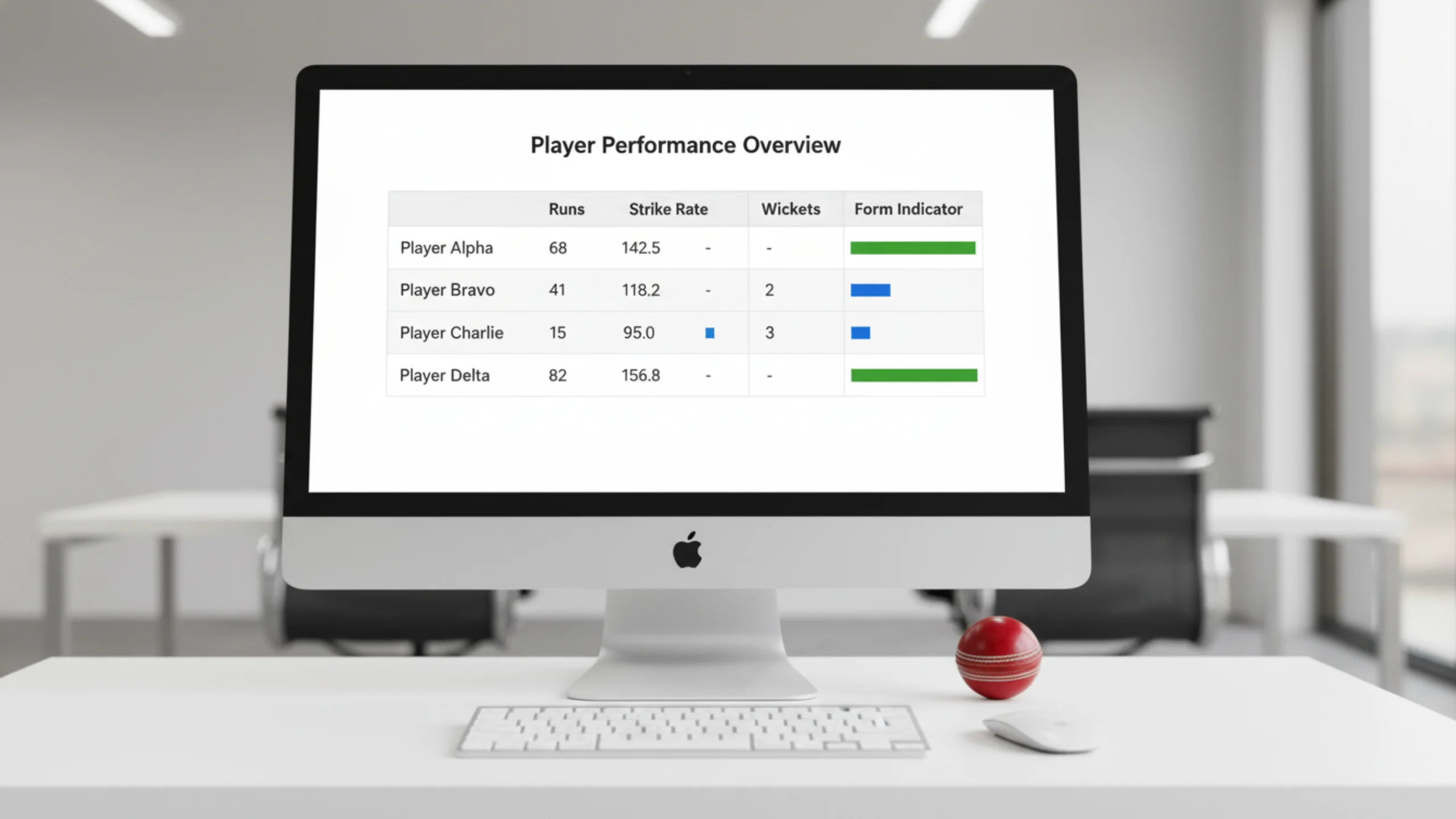
Beyond top batsman and top bowler lie deeper player performance markets. You can bet on whether a specific batsman scores over or under a certain number of runs, whether a bowler takes a particular number of wickets, how many boundaries a player hits, or countless other measurable outcomes. These granular markets reward the most detailed player knowledge.
Player runs markets set lines for individual batsmen—Virat Kohli over/under 35.5 runs, for instance. The bookmaker’s line reflects their assessment of that player’s expected output in the specific match context. Your analysis might differ based on factors the line doesn’t fully incorporate: recent form variations, specific matchup advantages against the opposing bowling attack, or historical performance at this particular venue.
Boundaries markets focus on fours and sixes rather than total runs. Power hitters known for clearing the rope might have six-hitting lines that reflect their reputation. But boundaries depend heavily on match situation. A batsman brought in to accelerate during death overs has more incentive to swing than one anchoring an innings. Understanding situational factors helps identify when lines misjudge likely outcomes.
Bowler wickets work similarly. A line might set a spinner at over/under 1.5 wickets for a match. Your assessment considers bowling conditions, the quality of opposition batsmen against spin, and where in the innings that bowler typically operates. A spinner bowling middle overs against tail-enders has different wicket probability than one operating in the powerplay against set batsmen.
Strike rate markets exist in some advanced sportsbooks. These ask whether a batsman’s scoring rate—runs per hundred balls—exceeds a certain threshold. Strike rate depends enormously on match context. Early-innings building phases produce lower strike rates than late-innings acceleration. Understanding when different players operate and how match situations affect scoring pace creates edge in these specialist markets.
Partnership markets predict how long batting pairs survive together before a wicket falls. Opening partnerships attract particular interest because they significantly influence innings outcomes. Some opening pairs consistently build substantial stands; others fall cheaply with regularity. Historical data on specific partnerships helps calibrate expectations against bookmaker lines.
The margins on player props typically exceed match winner margins, sometimes substantially. Bookmakers face less competition in these niche markets and can charge more for access. This reality means finding value requires greater analytical edge—the higher juice creates a steeper hill to climb toward profitability.
Futures and Outright Betting in Cricket
Futures betting, also called outright betting, extends your prediction timeline beyond single matches to tournaments and series. Before the IPL begins, you might back Mumbai Indians at 6.00 to win the competition. Before a Test series starts, you might predict Australia to beat England 3-1. These bets tie up your stake for extended periods but can offer substantial value for those who identify mispriced teams early.
Tournament winner markets appear months before competitions begin, with odds adjusting as news emerges and the event approaches. Early prices often contain more value than prices closer to kickoff because bookmakers have less information and face less scrutiny. Identifying strong teams before the market fully prices their chances is one path to outright betting profit.
Series betting on bilateral contests predicts not just the winner but sometimes the margin. You might bet on India to win a three-Test series 2-1, or Australia to win 3-0. These bets require assessing not just relative team strength but how closely matched the sides are and how conditions might influence individual Tests differently.
The main drawback of futures betting is capital lockup. Money placed on a tournament winner might sit committed for six weeks or more before resolution. This opportunity cost matters—those funds could potentially generate returns elsewhere during that period. Balancing futures positions against available bankroll and alternative opportunities is part of managing a betting portfolio.
Hedging futures becomes possible as tournaments progress. You backed Chennai Super Kings at 8.00 before the IPL. They’ve now reached the final, and their price has shortened to 2.00. By betting against them in the final, you can guarantee profit regardless of outcome—though at lower levels than simply letting the original bet ride. Understanding hedging mechanics helps optimise futures positions as situations evolve.
Proposition bets on tournament statistics add variety to futures markets. Top run scorer in a World Cup. Highest wicket-taker in the IPL. These markets combine player performance betting with the extended timeline of futures, requiring predictions about who will perform best across multiple matches rather than single games.
In-Play Markets and Live Betting Opportunities

Live betting transforms cricket from a prediction exercise completed before play starts into a dynamic engagement with matches as they unfold. Odds shift constantly based on events, creating opportunities that didn’t exist and disappearing opportunities that did. For bettors who can process information quickly, in-play markets offer unique advantages.
Live match winner odds fluctuate dramatically during play. A team might start as 1.80 favourites, drift to 2.50 after losing early wickets, and shorten to 1.30 after their batsmen rebuild. Each odds point represents a betting opportunity for those who correctly anticipate where prices are heading. Reading match momentum becomes a tradeable skill.
Ball-by-ball markets exist on some platforms, allowing bets on individual delivery outcomes. Will the next ball be a dot, single, boundary, or wicket? These markets move at cricket’s natural pace—roughly four opportunities per minute during active play. The speed demands quick thinking and creates potential for high volume betting, though margins tend to be substantial.
Over-by-over markets sit between ball-by-ball granularity and match-long positions. You might bet on runs scored in the next over exceeding or falling under a specified line. Understanding bowling patterns, field settings, and batsman tendencies helps predict over-by-over outcomes more accurately than the market.
Session markets in Test cricket divide each day into three betting periods. You can bet on session outcomes—which team dominates, how many runs are scored, how many wickets fall—without committing to match-long positions. Test cricket’s shifting momentum across sessions creates recurring betting opportunities for those tracking conditions and game state closely.
Next dismissal method appears during play, allowing bets on how the current batsman will get out. Caught, bowled, LBW, run out, stumped, or not out are typical options. Each batsman has dismissal tendencies based on technique, and match situations influence dismissal patterns. A batsman swinging for boundaries faces elevated caught probability; one defending doggedly on a turning pitch faces LBW and bowled risk.
The information advantage in live betting comes from watching matches rather than following text commentary. Visual information—body language, technical adjustments, field changes—provides insights text updates cannot capture. Bettors with access to reliable streams and the discipline to watch attentively possess genuine edges over those working from delayed or incomplete information.
Latency challenges complicate live betting. The stream you’re watching might run several seconds behind reality. Bookmakers receive data faster than public broadcasts. Betting on outcomes you’ve just witnessed often fails because the market has already adjusted. Successful live bettors focus on situations and patterns rather than reactive wagers.
Exotic and Specialty Cricket Markets
Beyond mainstream markets lie exotic and specialty options for bettors seeking unusual angles. These markets typically carry higher margins and lower liquidity but can reward creative analysis in ways standard markets cannot.
Method of first wicket predicts how the opening wicket falls in an innings. Caught, bowled, and LBW represent the most common outcomes, with run out and stumped less frequent. Historical patterns by innings, venue, and teams help calibrate expectations, though small sample sizes make confident predictions difficult.
Highest individual score asks which player will make the highest single score across both teams in a match. This differs from top batsman, which focuses on aggregate runs. A batsman making one score of 80 beats one making scores of 45 and 40, even though the latter accumulated more total runs. Match context heavily influences who gets opportunities for big individual innings.
Century and half-century markets let you bet on specific milestones. Will any batsman score a hundred? Will a particular player reach fifty? These markets depend heavily on match duration and conditions. T20 centuries are rare events; Test centuries occur more frequently. Understanding milestone probability by format and situation helps identify mispriced markets.
Winning margin markets predict not just who wins but by how much. In limited-overs cricket, this might mean runs margin for batting-first winners or wickets in hand for successful chasers. These markets reward understanding of how teams approach different match states—whether they press for maximum margin or coast once victory is assured.
Toss winner offers even-money odds on a genuinely random event. No skill exists in predicting coin flips. Yet some bettors include toss results in accumulators, inadvertently accepting worse overall value for a completely unpredictable outcome. Avoiding toss markets is straightforward advice that prevents pointless variance exposure.
Novelty markets emerge during major tournaments, offering odds on unlikely occurrences or statistical milestones. These markets exist primarily for entertainment rather than serious betting. The margins are typically extreme, the outcomes often unpredictable, and the analytical edge available to bettors minimal. Treating them as entertainment rather than opportunity protects your bankroll.
Choosing Markets That Match Your Edge

Not every market suits every bettor. Your knowledge base, analytical approach, and betting style should guide market selection. Spreading attention across everything available dilutes focus without creating corresponding advantage. Specialisation in areas where you possess genuine edge produces better results than superficial engagement with everything.
If your cricket knowledge centres on team dynamics—how squads perform, coaching strategies, historical patterns between sides—match winner markets leverage that strength directly. You’re assessing relative team quality, which is precisely what match betting rewards.
If you obsessively track individual player statistics—batting averages by venue, bowling records against specific oppositions, form trajectories—player performance markets convert that knowledge into betting edge. Your detailed player models might identify mispricings that broader analysis misses.
If you understand venue characteristics deeply—how grounds play, historical scoring patterns, condition evolution—total runs and first innings markets suit your expertise. Your venue knowledge helps predict scoring environments more accurately than bookmaker models might.
If you can process information quickly and maintain emotional control during live action—reading momentum shifts, anticipating odds movements, executing decisions under time pressure—live betting offers opportunities that suit your temperament and skills.
The worst approach is betting every market across every match because action is available. This guarantees engagement but not profit. Bookmaker margins exist in every market. Overcoming those margins requires edge. Edge comes from knowing more than the market in specific areas. You cannot know more than the market everywhere.
Building market expertise takes time and deliberate practice. Track your results by market type. Identify where you consistently find value and where you consistently lose. Double down on strengths; abandon weaknesses. This iterative refinement gradually reveals where your sustainable edge actually lives.
Cricket’s market diversity creates genuine opportunity for bettors willing to specialise. The sport offers enough variety that almost any analytical inclination can find suitable markets. But diversity also creates temptation—the urge to bet everything because everything is available. Resisting that temptation while developing focused expertise is the path toward consistent profitability in cricket betting markets.
