
 Available in US
Top Batsman Betting: Picking Run-Scorer Winners
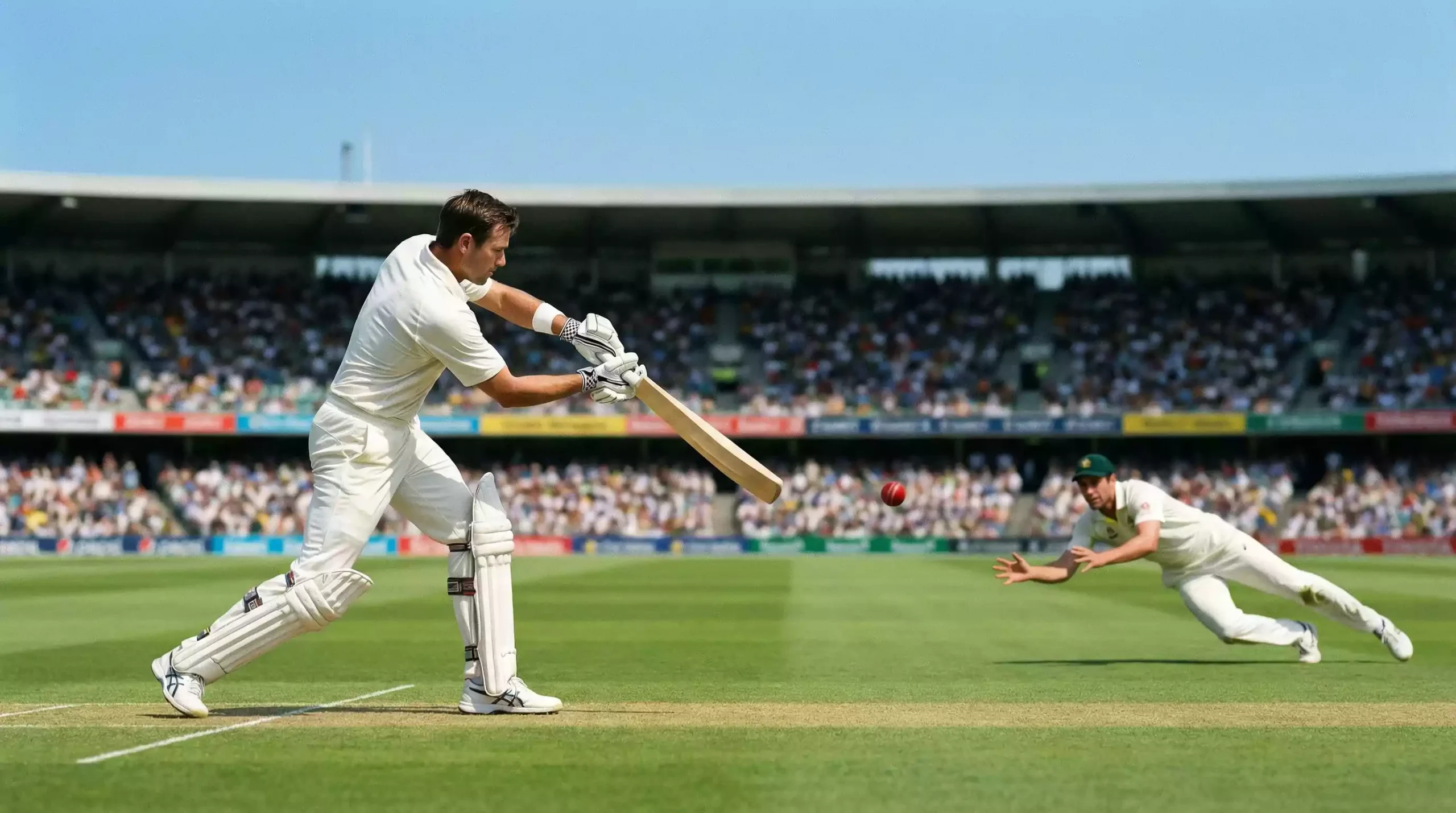
The top batsman market is one of cricket betting’s most popular player propositions, and one of the most misunderstood. Bettors gravitate toward star names — Virat Kohli, Joe Root, Steve Smith — because brand recognition feels like analysis. But the market does not reward fame. It rewards the bettor who understands why batting order position, matchup data, and venue conditions matter more than reputation, and who can identify the specific situations where a less-heralded player offers dramatically better value than the obvious favourite.
This guide breaks down the mechanics of top batsman markets and the analytical framework that turns this high-variance bet into a structured, repeatable strategy.
How Top Batsman Betting Markets Work
The top batsman market asks you to predict which player will score the most runs in a specified period — usually a single innings, a full match, or an entire series. Each player in the batting line-up is assigned individual odds, with favourites at shorter prices and lower-order batsmen at longer odds. If your selected player scores the most runs, the bet wins. If two or more players tie for the highest score, dead-heat rules apply — your payout is divided by the number of tied players.
Bookmakers set these odds based on a combination of historical scoring data, current form, batting position, and the match context. The opener who averages 45 in the format and has been in good recent form will typically be the shortest-priced option. The number seven batsman with a career average of 25 will be at much longer odds. This pricing is directionally correct — openers do outscore lower-order players more often than not — but the degree to which it is correct in any given match is where the value lies.
The key structural feature of this market is that it is a multi-runner proposition, similar to a horse race. In a T20 with eleven batsmen per side, you are effectively betting on a field of eleven. Even the strongest favourite rarely has a probability above 20-25% of being the top scorer, which means the market is inherently dispersed. This dispersion creates opportunity because small errors in the bookmaker’s probability estimates translate into significant value at the offered odds. A player priced at 12% implied probability who actually has a 16% chance of topping the scorecard is a strong value bet, even though they will lose this bet roughly five times out of six.
Batting Position: The Structural Advantage
Batting order is the single most important factor in top batsman markets, and it is the factor that casual bettors most frequently underweight. The arithmetic is straightforward: the higher you bat, the more balls you face. The more balls you face, the more runs you are likely to score. An opener in a T20 can face up to 60-70 deliveries if they bat through the innings. A number six batsman might face 15-20. The run-scoring ceiling is fundamentally different.
In Test cricket, this positional advantage is even more pronounced because innings can span entire days. An opener who survives the new ball and bats through a session has the structural opportunity to score a century or more. A number eight batsman, no matter how talented, rarely bats long enough to compete for the top-scorer slot unless the top order collapses — which is a scenario worth considering in your analysis but not one to bet on as a default.
ODIs sit in the middle. The opening pair faces the most deliveries, but the modern ODI batting order is flexible enough that a number three or four who comes in early and bats through to the death overs can outscore the openers. The key variable in ODIs is how early the middle-order batsmen arrive at the crease. If the openers put on a hundred-run stand, the middle order faces fewer deliveries and the top batsman market heavily favours the openers. If a wicket falls in the first five overs, the middle order has time to build a major innings.
This is where pre-match analysis of the opposition’s bowling attack becomes actionable. If the new-ball bowlers are particularly dangerous — think Jasprit Bumrah or Shaheen Afridi in helpful conditions — the probability of an early wicket increases, which shifts value from the openers toward the number three and four. Conversely, a toothless new-ball attack on a flat pitch increases the probability that openers will bat deep into the innings and dominate the run-scoring.
Matchups and Bowling Type Analysis
Beyond batting position, the most reliable edge in top batsman markets comes from understanding how specific batsmen perform against specific bowling types. A right-handed batsman with a technical weakness against left-arm spin will score fewer runs in a match where the opposition has two quality left-arm spinners. A left-hander who feasts on right-arm pace but struggles against wrist spin will thrive or flounder depending on the bowling composition they face.
This matchup data is increasingly available through platforms like ESPNcricinfo and CricViz, which provide ball-by-ball records, strike rates against bowling types, and dismissal patterns broken down by bowling style. Mining this data takes effort, but it produces insights that are not fully reflected in the bookmaker’s odds, which tend to rely on aggregate batting averages rather than granular matchup splits.
Venue-specific performance is another matchup dimension. Some batsmen have outstanding records at particular grounds — Ben Duckett averaging 65 at a specific English venue, or Rohit Sharma’s extraordinary record at certain Indian grounds. These venue effects are partly skill-based (a batsman’s technique suiting the conditions) and partly sample-based (small numbers of matches can produce misleading averages). The analytical challenge is distinguishing genuine venue advantages from statistical noise, and the way to do that is to look at whether the venue’s characteristics — bounce, pace, turn, boundary dimensions — align with the batsman’s known strengths.
Form, Fitness, and Selection Intel
Current form is the most visible factor in top batsman markets and the one that bookmakers and the public weight most heavily. A batsman who has scored three consecutive half-centuries will have shorter odds than a player of similar ability who has been through a lean patch. The question for the value bettor is whether form is being overpriced or underpriced in the current odds.
Short-term form in cricket is real but limited. Research on batting performance shows that a hot streak of three to five good innings provides some predictive signal — the batsman’s technique is in good order, their confidence is high, and they are making good decisions at the crease. But beyond that window, regression to the mean kicks in. A player averaging 60 over their last five innings when their career average is 40 will not sustain that rate. The market, however, sometimes prices them as if they will, especially in high-profile tournaments like the IPL where recency bias runs rampant.
Fitness and workload are subtler factors that affect top batsman probability. A player coming off a gruelling Test series who is thrust into an ODI within days may be physically fatigued, which affects concentration and shot execution even if the player is technically available. Players managing minor injuries — a sore back, a stiff shoulder — may be able to bat but not at their full capacity. These soft factors rarely show up in the odds unless the injury is publicly disclosed, and even then the market adjustment is often insufficient.
Selection timing matters too. If the team sheet is not yet confirmed, the bookmaker may price players who end up not playing or who bat at a different position than expected. Monitoring team news closely in the hours before a match — especially squad rotation in franchise leagues — gives you an information edge that directly affects top batsman odds. A player who drops from number three to number five due to a tactical reshuffle sees their top-scorer probability decrease meaningfully, but the odds may not adjust in time if the change is announced close to the toss.
Dead-Heat Rules and Market Mechanics
Understanding dead-heat settlements is essential for top batsman bettors because ties occur more frequently than most people expect. In a T20 where multiple batsmen score 35-45, the probability of two players finishing level is substantial. When a dead heat occurs, your payout is divided by the number of tied players. If you backed a player at odds of 5.00 and they tie with one other player, your effective odds become 3.00 (original odds plus one, divided by two, adjusted for your stake).
This mechanic has implications for market selection. In formats where a single player is likely to dominate the scoring — a Test innings where one batsman bats all day, or a T20 where an opener carries the bat — dead heats are less common and the market behaves more predictably. In formats where scoring is distributed across multiple contributors — a balanced ODI innings where four batsmen score between 40 and 60 — dead heats are more frequent and erode the value of every selection in the market.
Some bookmakers offer “top batsman without” markets that exclude one or two favourites, creating a smaller field where the remaining players have higher individual probabilities. These markets can offer cleaner value because removing the obvious favourite reduces the field size and concentrates the probability among the remaining runners. If you have a strong view on a middle-order player but do not want to compete against the favourite opener, the “without” market is the right vehicle.
Price Versus Probability: The Only Equation
Top batsman betting is not about predicting who will score the most runs. It is about finding the player whose odds are too long relative to their actual probability of finishing as the leading scorer. The opener at 4.00 might be the most likely top scorer, but if their true probability is 22% and the odds imply 25%, there is no value. The number five at 9.00 might have only a 14% chance, but if the odds imply just 11%, the value sits with the longer shot. Train yourself to ignore the instinct to back the most likely winner and instead follow the maths to the most mispriced runner. That discipline is what makes this market profitable over hundreds of bets rather than a fun gamble on individual matches.
