
 Available in US
Pakistan Super League Betting: PSL Odds and Strategy
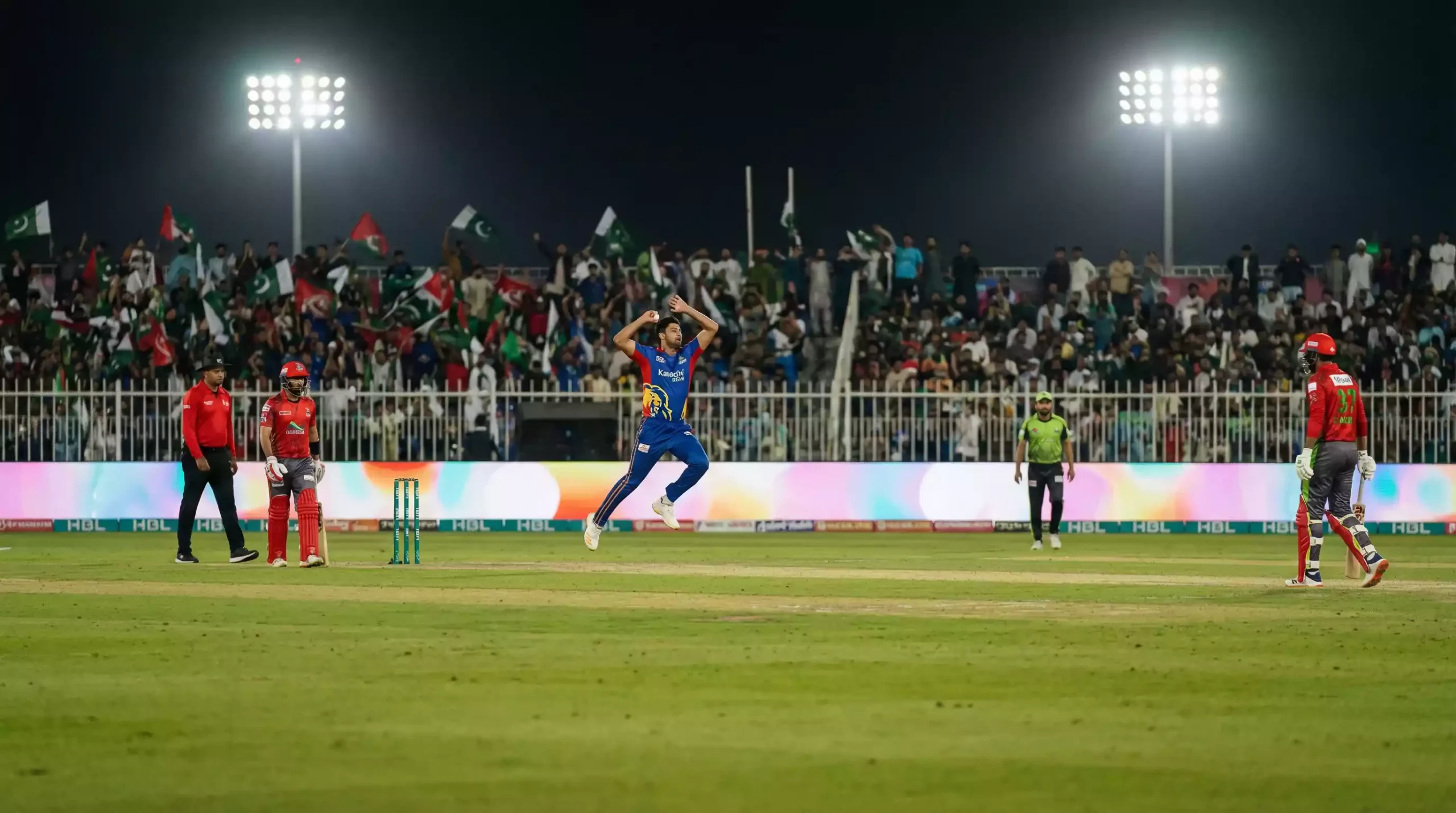
The Pakistan Super League has grown from a fledgling franchise tournament into one of the most tactically fascinating T20 leagues in the world. It does not yet command the betting market depth of the IPL or the historical data library of the Big Bash, but that relative immaturity is precisely what makes it attractive to bettors who are willing to do the work. PSL markets are less efficient, public money is less informed, and bookmaker models are calibrated on thinner data — all of which creates value gaps that barely exist in more established leagues.
This guide covers the structural features of the PSL that matter most for betting, from venue conditions and franchise dynamics to the overseas player mix that gives the tournament its unpredictable edge.
PSL Venue Conditions: Analyzing Pakistan’s Cricket Grounds
The PSL has been played across a growing roster of Pakistani venues since the tournament fully returned to home soil, and the conditions vary more than casual observers expect. Pakistan is not a single cricketing environment — it is a country where conditions range from the flat, high-scoring surfaces of Karachi to the pace-friendly pitches of Rawalpindi to the spin-supportive grounds of Multan and Lahore.
Karachi’s National Stadium has historically produced the highest-scoring PSL matches. The pitch tends to be flat and true, offering little for seam bowlers and rewarding batsmen who play through the line. Death-over totals at Karachi are consistently above the PSL average, and the over/under match-total line is typically set higher here than at any other venue. For batting-first teams, Karachi is where 180-plus totals are routine and 200 is achievable. For bettors, the key signal is whether the Karachi pitch for a specific match is the standard flat deck or an occasional outlier that offers more assistance — watching pre-match pitch reports and early-match ball behaviour is essential before committing to totals markets.
Rawalpindi’s Pindi Cricket Stadium provides a contrasting environment. The pitch here offers more pace and bounce than any other regular PSL venue, which favours teams with quality fast-bowling attacks and punishes batting line-ups that lack technique against short-pitched bowling. First-innings totals at Rawalpindi tend to be 10-15 runs lower than at Karachi, and the top bowler market tilts toward seamers rather than spinners. Rawalpindi matches also produce more wickets in the powerplay, which has direct implications for powerplay over/under and first-wicket markets.
Lahore’s Gaddafi Stadium and Multan’s Multan Cricket Stadium introduce subcontinental spin into the equation. Both venues have produced pitches that grip and turn as matches progress, giving wrist spinners and finger spinners an increasing role as the tournament develops and the surfaces deteriorate through repeated use. In the later stages of the PSL, when playoffs and knockouts are typically concentrated at one or two venues, the pitch condition at that specific ground can shift dramatically from how it played during group-stage fixtures weeks earlier.
Franchise Strengths and Tactical Identity
PSL franchises develop distinct tactical identities that persist across seasons, even as squads change. Understanding these identities — which teams prioritise power hitting, which invest in death-over bowling, which rely on spin in the middle overs — is essential for market selection because it tells you where each franchise’s strengths align with or conflict with the conditions they face in each match.
Islamabad United has historically been among the most analytically driven franchises, with a squad-building philosophy that emphasises death-over execution and middle-overs control. Their bowling attack tends to be well-balanced across pace and spin, which gives them consistency across different venues. For bettors, Islamabad’s consistency makes them a reliable proposition in match-winner markets but a less attractive option in high-variance props, because their balanced approach produces fewer extreme individual performances.
Lahore Qalandars spent several seasons as the PSL’s underachievers before a strategic overhaul transformed them into title contenders. Their current identity centres on aggressive top-order batting — particularly in the powerplay — and a reliance on a small core of high-quality overseas players to anchor the middle overs. When Lahore’s overseas contingent fires, they are capable of chasing any total. When those key players fail, the domestic support cast has historically been less reliable, creating a boom-or-bust profile that suits accumulators and high-odds props but carries significant risk in straightforward match-winner bets.
Quetta Gladiators, Peshawar Zalmi, Multan Sultans, and Karachi Kings each bring their own tactical fingerprints. Multan Sultans, in particular, have established themselves as one of the most formidable home teams in the PSL, leveraging their familiarity with Multan’s spin-friendly conditions and building squads that include high-quality spin options. When Multan play at home, the top bowler market should skew toward their spinners, and match-winner odds should reflect a stronger home advantage than the generic PSL home-field figure.
The Overseas Player Dynamic
Every PSL squad includes a mix of Pakistani domestic players and overseas recruits, and the quality gap between these two tiers is often wider in the PSL than in leagues like the IPL or BBL, where domestic player pools are deeper. This talent disparity means that overseas players carry outsized influence on match outcomes, and their availability — or absence — disproportionately affects team performance and betting odds.
Overseas player availability in the PSL is a perennial issue. Some high-profile signings arrive late due to international commitments, leave early for bilateral series, or skip portions of the tournament for workload management. When a franchise’s marquee overseas batsman or lead overseas pace bowler is unavailable for a specific match, the team’s expected performance drops more sharply than it would in a league with greater domestic depth. Monitoring team news and availability updates in the days before each match is one of the most impactful research activities for PSL betting, because the market sometimes prices matches based on full-strength squads when the actual line-up will be significantly weaker.
The replacement player market adds another dimension. When a franchise replaces a top-tier overseas player with a lesser-known alternative, the market may underestimate the drop-off if the replacement’s stats are not widely known. Conversely, some replacements outperform expectations because they bring a specific skill set — left-arm pace, wrist spin, explosive lower-order hitting — that complements the existing squad better than the player they replaced. Tracking the specific replacements and their recent form in other leagues or domestic cricket provides information that most casual bettors and some bookmaker models overlook.
Draft dynamics shape the long-term composition of PSL squads in ways that differ from auction-based leagues like the IPL. The PSL player draft assigns overseas players to categories based on expected salary, and franchises select in a structured order that rewards the previous season’s weakest teams with earlier picks. This draft structure means that talent distribution across the league is slightly more balanced than in auction leagues, where wealthy franchises can outbid competitors for premium players. The betting implication is that PSL win-rate distributions are less skewed than in the IPL — there are fewer overwhelming favourites and fewer hopeless underdogs, which compresses match-winner odds and makes value harder to find in the headline market but easier to find in player props and phase-specific totals.
Scheduling and Tournament Flow
The PSL’s scheduling creates its own set of betting considerations. The tournament is typically compressed into a four-to-six-week window, with double-headers on weekends and back-to-back fixtures that strain squad depth. Fatigue accumulates rapidly, and teams that rely heavily on a small core of key players — particularly fast bowlers, whose workloads are the most physically demanding — tend to see performance decline in the second half of the group stage.
The tournament’s venue rotation means that teams play on different surfaces throughout the group stage before the playoffs concentrate at a single venue. This rotation rewards versatile squads that can adapt their strategy to different conditions, while one-dimensional teams — all-out pace attacks or exclusively spin-heavy sides — perform inconsistently as they move between grounds. For bettors, tracking a team’s venue-specific record within the PSL is more informative than their overall win-loss record, because a team that dominates at Rawalpindi but struggles at Karachi has a matchday-dependent probability that the aggregate figure masks.
Playoff dynamics introduce intensity and context effects. The eliminator format — where fourth plays fifth in a single knockout — creates a do-or-die stakes environment that amplifies the performance of experienced, pressure-hardened players. Franchises with a core of Pakistani internationals and battle-tested overseas veterans tend to outperform their regular-season form in eliminators, while younger squads and franchises with less knockout experience tend to underperform. If the bookmaker prices playoff matches using regular-season data without adjusting for the pressure differential, there is value on the experienced side.
PSL Betting Markets and Liquidity
The PSL’s growing profile has attracted increasing bookmaker coverage, but market depth remains below that of the IPL. Match-winner and innings-total markets are reliably available on all major platforms. Player prop markets — top batsman, top bowler, player performance milestones — are available on most but not all platforms and may have wider margins than the equivalent IPL markets. Niche props like method of dismissal and phase-specific totals are sometimes unavailable or priced with limited liquidity, which means that while the value may be larger, the practical ability to exploit it can be constrained by stake limits.
The flip side of thinner liquidity is less price competition, which means that the odds offered by different bookmakers on the same PSL market can diverge more than they would for IPL fixtures. Shopping for the best price across multiple platforms is even more important in the PSL than in more liquid leagues, because the spread between the best and worst available price on a single market can reach 10-15% in implied probability terms.
The Emerging Market Advantage
The PSL is a betting market that is still maturing — and mature markets are efficient markets. The bettors who develop PSL expertise now, while the market is still finding its footing, are building an analytical edge that will compound as the tournament grows in stature, prize money, and media coverage. Every league eventually attracts enough sophisticated money to close the obvious value gaps. The question is whether you will be positioned as one of the bettors who found those gaps early or one who arrived after they had already been priced out.
