
 Available in US
Head-to-Head Records: Shaping Cricket Betting Value
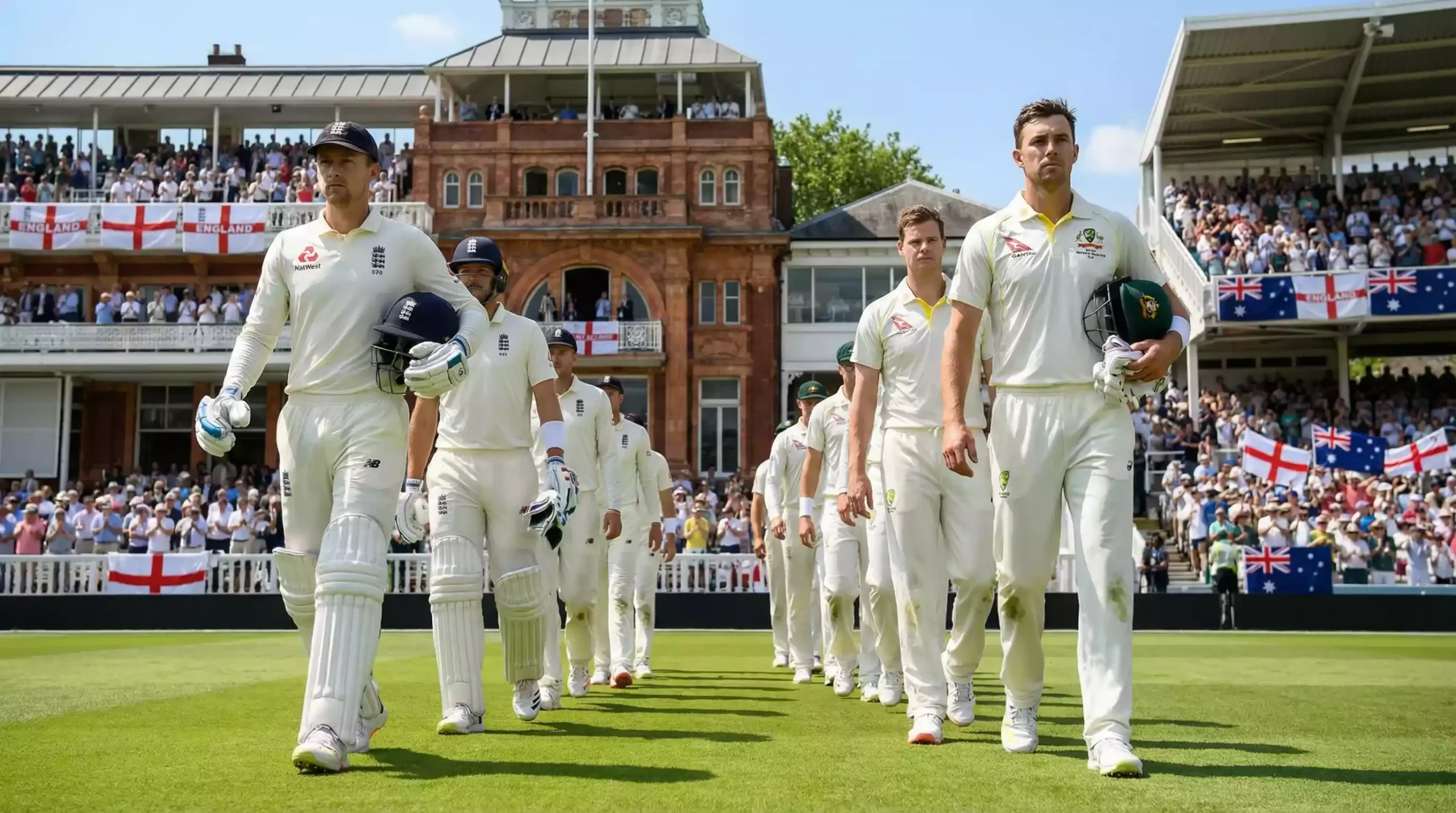
Cricket is a sport defined by its rivalries. India versus Pakistan. England versus Australia. South Africa versus Australia. These matchups carry historical weight that goes beyond the current form of either team, and that history — captured in head-to-head records spanning decades — influences how bookmakers price matches, how the public bets, and where genuine value hides for bettors willing to dig into the numbers. The question is not whether head-to-head records matter for betting, because they clearly do. The question is how much they should matter, and how to separate the signal from the noise in a dataset that often stretches back longer than the careers of any player currently involved.
Head-to-head analysis is one of those areas where casual bettors either ignore the data entirely or overweight it dramatically. The truth, as usual, sits in between. Historical head-to-head records carry meaningful information about venue familiarity, psychological dynamics, and tactical patterns between specific cricketing cultures. But they also contain a lot of irrelevant data from eras when different players, conditions, and rules applied. This guide explains how to use head-to-head records productively for betting, where they add genuine value, and where they lead you astray.
Analyzing Team Head-to-Head Records in Cricket
When two cricket teams have played each other 80 times over 30 years, the aggregate win-loss record contains information, but it requires careful interpretation to be useful for betting on the next match. The raw head-to-head number — “Australia leads 45-30 with 5 draws” — is interesting as context but almost useless as a predictor, because the teams of 2026 share very little with the teams of 2000 beyond the national flag.
The useful approach is to filter head-to-head records by recency and conditions. The last 10-15 matches between two teams in a specific format, at venues with similar conditions, are far more informative than the all-time record. If you are betting on an India-England Test match in India, the relevant head-to-head data is not the overall series record going back to 1932 — it is how England has performed in India over the past two or three tours, which specific players thrived or struggled, and how the tactical battle between the two sides played out in subcontinental conditions specifically.
Head-to-head records are most predictive when they reveal persistent tactical mismatches. Some cricketing cultures have stylistic tendencies that consistently create problems for specific opponents. New Zealand’s seam-heavy bowling attack, built for swing and movement off the surface, has historically troubled batting lineups from subcontinental teams who are less accustomed to those conditions. Pakistan’s wrist-spin tradition has caused recurring problems for teams with technical weaknesses against leg spin. These stylistic matchups persist even as individual players change, because the underlying cricketing philosophy and development pathways remain consistent across generations.
The head-to-head record also captures something the form guide cannot: the psychological dimension of rivalry. When India plays Pakistan, the pressure, expectation, and emotional intensity are unlike any bilateral series or even most ICC tournaments. That pressure affects performance in measurable ways — some players elevate their game in high-profile rivalries while others shrink — and the head-to-head record, filtered for recent matches, reflects those pressure responses. The market usually accounts for the rivalry premium in some way, but the adjustment is often too blunt, either overweighting the historical record or not sufficiently accounting for the unique psychological dynamics of the specific matchup.
Player Head-to-Head Records and Matchup Value
While team-level head-to-head records require careful filtering, player-level matchup data is more directly actionable for betting because it captures specific interactions between individuals who will actually be on the field. A bowler’s record against a particular batsman is a concrete data point that tells you something about the matchup between their respective skills, techniques, and tactical approaches.
Player head-to-head data is most valuable for top-batsman and top-bowler markets, where individual performance determines the outcome. If a bowler has dismissed a specific batsman five times in 30 deliveries, that bowler holds a genuine advantage in that matchup that is likely to persist. The reasons are usually technical — a particular delivery type or angle that exploits a weakness in the batsman’s technique — and technical weaknesses do not disappear between series. When a top-order batsman faces a bowler who has historically troubled him, the batsman’s expected output in that matchup is lower than his career average suggests, and the top-batsman market may not fully price this discount.
The sample-size trap is the biggest risk in player-level head-to-head analysis. Cricket generates relatively few direct encounters between specific pairs compared to sports like tennis or basketball, where the same individuals face each other hundreds of times. A batsman might have faced a particular bowler only 20-40 deliveries across their entire careers, which is a tiny sample from which to draw reliable conclusions. The discipline required is to treat small-sample matchup data as supplementary evidence rather than primary analysis, giving it weight proportional to the sample size and the consistency of the pattern.
Combining player matchup data with stylistic analysis helps overcome the sample-size limitation. If a batsman struggles against a specific bowler, and that bowler’s style — left-arm pace, leg spin, short-pitched fast bowling — is the type that the batsman also struggles against more broadly, the matchup data and the stylistic analysis reinforce each other and the signal is stronger. If the matchup data contradicts the stylistic analysis — the batsman should theoretically handle this bowling type but has a poor record against the specific bowler — the explanation might be psychological rather than technical, and the data warrants less confidence.
Venue-Specific Dominance in Head-to-Head Matchups
The intersection of head-to-head records and venue data is where the analysis becomes most powerful for betting. Some teams dominate specific opponents at specific venues with a consistency that transcends individual player careers, and these venue-specific dominance patterns are among the most reliable predictors in cricket betting.
Australia’s record at the Gabba in Brisbane is the textbook example. Australia had not lost a Test at the Gabba for over three decades until India’s breakthrough in 2021, and while that streak has ended, the underlying conditions advantage — pace, bounce, and unfamiliarity for touring batsmen — remains. When Australia plays at the Gabba, their head-to-head record against most touring teams at that specific venue is more predictive than the broader series head-to-head, because the venue itself amplifies Australia’s strengths and exposes touring teams’ weaknesses. Match odds for Gabba Tests that do not adequately weight this venue-specific dominance are leaving value on the table.
India’s dominance at home against touring teams is another clear example, but the venue specificity matters. India’s record in Chennai against England is different from India’s record in Mumbai against the same opposition, because the pitch, the conditions, and the specific challenges posed to touring batsmen vary significantly between Indian venues. An informed bettor treats each Indian venue as a distinct challenge for the touring team and assesses the head-to-head record accordingly, rather than lumping all “India at home” data into a single bucket.
The relevance of venue-specific head-to-head records extends to limited-overs cricket as well. Some grounds produce consistent results in ODIs and T20Is between specific teams because the conditions persistently favor one side’s playing style. A team with a strong pace attack that consistently bowls well at a ground with pace and bounce will maintain that advantage match after match, and the head-to-head record at that venue reflects the structural edge rather than random variation.
The practical application for betting is to build a venue-level view of head-to-head performance rather than relying on aggregate national records. When a match is announced at a specific venue, check how the two teams have performed against each other at that ground over the past decade. If the pattern is strong and consistent, it deserves meaningful weight in your pricing, potentially more weight than recent bilateral form if the form has been compiled at different venues under different conditions.
Format-Specific Rivalries and Their Betting Implications
Head-to-head records vary dramatically by format, and applying a team’s Test record against an opponent to an ODI or T20 match between the same sides is a common analytical error. The skills, tactics, and player hierarchies that determine outcomes in Test cricket are substantially different from those in limited-overs formats, and the head-to-head record in one format tells you very little about the expected result in another.
India versus Australia in Test cricket has been competitive and closely fought for two decades, with both teams winning series at home and producing iconic contests. But India versus Australia in T20 internationals is a different story with different key players, different tactical dynamics, and different pressure points. A bettor who prices an India-Australia T20 match based on the Test head-to-head, or vice versa, is importing irrelevant data into their analysis.
The most instructive format-specific rivalries for betting are those where one team has a persistent advantage in a single format that does not extend to others. England versus Australia in ODI cricket has historically been more competitive than the Test head-to-head suggests, because England’s limited-overs development in the past decade transformed them into a dominant white-ball side even while their Test results fluctuated. Pricing an England-Australia ODI based on the Ashes narrative would consistently undervalue England’s limited-overs capabilities.
Pakistan versus India is the rivalry where format-specific analysis matters most. In Test cricket, the two teams rarely play each other and the data is too sparse for reliable conclusions. In ODI World Cups, India has dominated the head-to-head with remarkable consistency. In T20 World Cups, the record is closer. Each format’s head-to-head carries distinct information that should be applied only to matches in the same format, and the temptation to import the emotional weight of the broader rivalry into format-specific pricing should be resisted.
Within T20 leagues, head-to-head records between franchises can also be format-relevant. In the IPL, certain franchise matchups produce lopsided records that reflect persistent tactical or squad advantages. If one franchise has won seven of the last ten encounters against a specific opponent, and the reasons are traceable to consistent factors like home-ground advantage, bowling matchup superiority, or tactical approach, the head-to-head record is informative for the next match between those sides.
The Rivalry Trap
Here is the most important caveat about head-to-head analysis in cricket betting, and it is worth stating bluntly: historical head-to-head records are the most overvalued input in casual cricket betting. The reason is psychological rather than analytical. Rivalries carry emotional weight. India-Pakistan matches, Ashes Tests, and other storied contests generate narratives that feel predictive even when they are not. A commentator saying “Australia have won the last four matches at this ground against this opposition” sounds like actionable information, but it might reflect nothing more than the fact that Australia had better teams during those four matches, and the current Australian side bears little resemblance to those previous ones.
The disciplined bettor uses head-to-head data as one input among many, weighted according to the recency, relevance, and sample size of the data. The undisciplined bettor uses it as a narrative shortcut that feels like analysis but functions as bias. The difference between these two approaches determines whether head-to-head records help or hurt your betting. If you can isolate the structural, persistent factors in a head-to-head record — venue conditions, stylistic mismatches, tactical patterns that transcend individual player turnover — you have a genuine edge. If you are simply betting on “Australia always beats this team here,” you are telling yourself a story, and stories are what the betting market feeds on, not what it rewards.
