
 Available in US
ICC Cricket World Cup Betting and Outright Markets
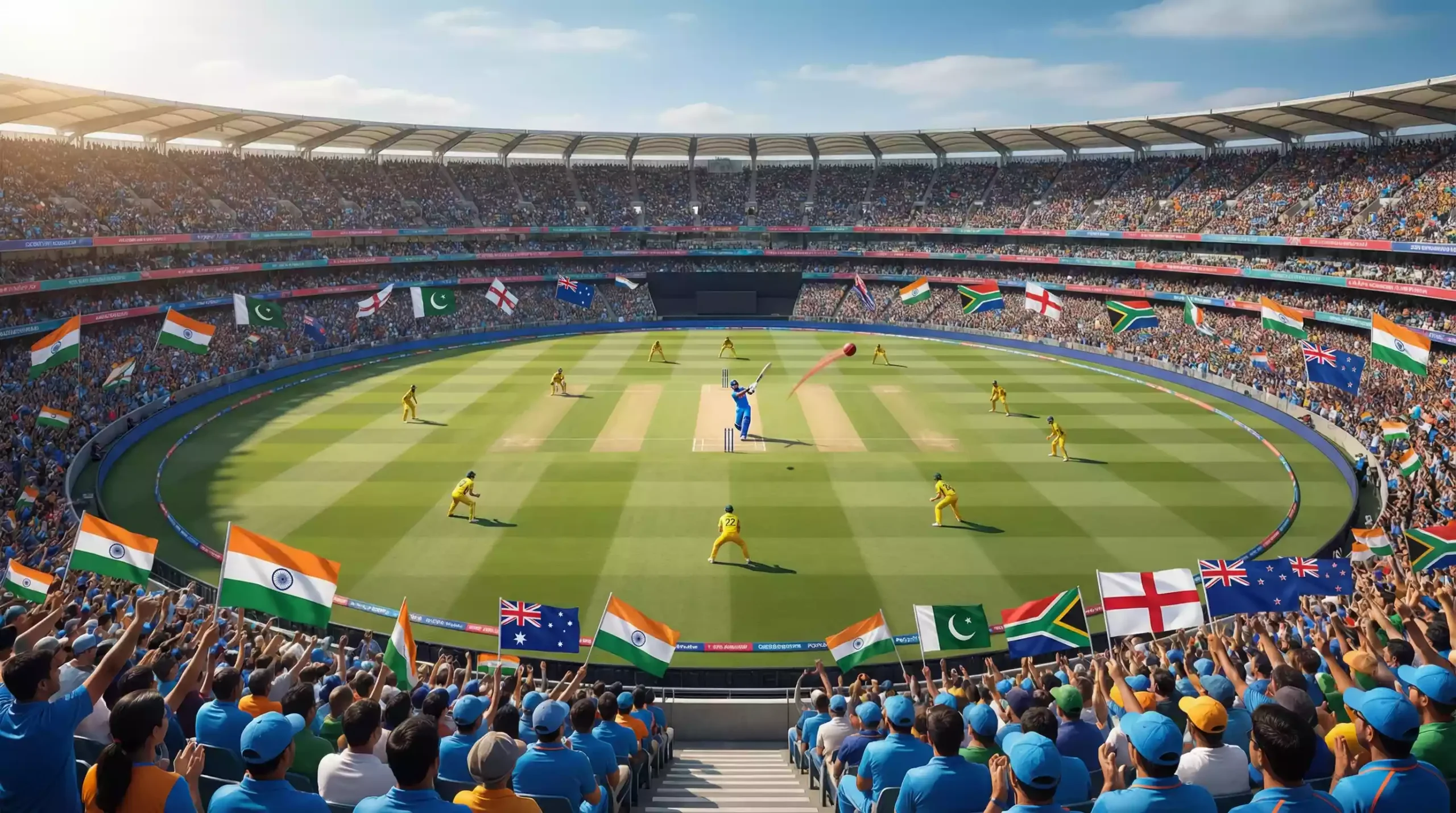
The 50-over Cricket World Cup is the sport’s grandest stage, a month-long tournament that captures the attention of billions and produces moments that define entire cricketing generations. For bettors, the ODI World Cup occupies a unique position in the calendar. It combines the strategic depth of 50-over cricket — where patience, adaptability, and planning matter more than in T20s — with the tournament dynamics of knockout pressure, unfamiliar conditions, and the weight of national expectation that can turn pre-tournament favorites into early casualties.
What makes ODI World Cup betting distinct from regular bilateral ODI betting is the compressed, high-stakes format. Teams play a round-robin or group stage followed by knockouts, and every match carries consequences that ripple through the outright market. A single upset in the group stage can reshape qualification scenarios, shift net run rate calculations, and send outright odds lurching in directions the market did not anticipate the day before. This volatility is the bettor’s opportunity, provided you understand the tournament’s mechanics and the historical patterns that repeat across editions.
ODI World Cup Outright and Match-Level Markets
The outright winner market is where the biggest money flows in ODI World Cup betting, and it is also the market with the longest timeframe and greatest complexity. Outright odds open months before the tournament, respond to squad announcements and warm-up matches, and continue moving throughout the event. The key to profiting from the outright market is understanding that it is not a single bet placed before the first ball — it is a dynamic position that should be managed actively as the tournament unfolds.
Pre-tournament outright odds are shaped by a combination of ICC rankings, recent bilateral form, and perceived squad strength. These factors matter, but they do not capture everything. Tournament cricket is its own discipline, and some nations consistently perform better (or worse) in World Cup settings than their regular ODI form suggests. Australia’s record of reaching knockout stages regardless of their pre-tournament ranking is a historical pattern that any outright pricing should account for. Similarly, teams with limited recent ODI experience — perhaps because they have been focused on T20 leagues or Test cricket — may be undervalued if their core players have extensive tournament pedigree.
Match-level betting at the ODI World Cup offers daily opportunities throughout the group stage. The match winner market is the most liquid, but over/under runs, top batsman, top bowler, and innings-specific markets all carry enough volume for meaningful bets. The critical adjustment for match betting at a World Cup versus a bilateral series is that every match exists within a broader tournament context. A team that has already qualified might rest key bowlers. A team needing a big net run rate boost might bat aggressively beyond what the match situation alone would dictate. These contextual factors create pricing inefficiencies that pure form-based models miss.
Group-Stage Strategy
The group stage of an ODI World Cup is where patient, disciplined bettors build the foundation for tournament profitability. The structure varies between editions — some use a single round-robin, others split teams into groups — but the underlying betting dynamics are consistent.
Early group matches are the most unpredictable phase of the tournament. Teams are adjusting to conditions, finding their best combination, and dealing with the unique pressure of a World Cup opener. Historical data shows that first-match upsets are more common in ODI World Cups than at any other stage, particularly when a strong team faces a motivated underdog in the opening round. The market usually prices these matches based on perceived team quality, but the adjustment for first-match jitters is often insufficient. Backing slight underdogs in opening matches, or at minimum reducing your stake on heavy favorites in round one, is a historically sound approach.
As the group stage progresses, the picture clarifies and the value shifts. Mid-group-stage matches between evenly matched teams produce the tightest odds and require the sharpest analysis. This is where conditions knowledge becomes decisive — understanding how the specific pitch at the specific venue will play on that particular day, which team’s bowling attack is better suited to those conditions, and how the toss interacts with any dew or deterioration expected. These matches are often close to 50-50 in reality, and even small analytical edges translate into meaningful value when the odds are tight.
The final round of group matches introduces dead-rubber dynamics. Teams already eliminated or already qualified play with different intensity, and motivation becomes the dominant variable. Dead rubbers are notoriously difficult to price, and the market often defaults to ranking-based odds that do not account for the absence of competitive stakes. A qualified team resting three key players for the knockout stage is a fundamentally different proposition from its full-strength version, and the market does not always adjust rapidly enough when team news confirms the expected rotation.
Knockout-Round Dynamics
The knockout stage of an ODI World Cup transforms the betting landscape. The stakes escalate, the margin for error vanishes, and the psychological dimension of the contest becomes at least as important as the tactical one. Teams that cruised through the group stage sometimes freeze in quarterfinals and semifinals, while teams that scraped through on net run rate occasionally produce their best cricket when elimination is on the line.
Knockout ODI matches tend to be lower-scoring than group-stage matches at the same venue. The data across multiple World Cups supports this pattern — teams bowl and field with greater intensity, batsmen play more conservatively in the early overs, and the fear of losing creates a risk-averse approach that suppresses run rates. For over/under runs markets, reducing your expected total by 15-25 runs compared to the group-stage average at the same ground is a reasonable calibration for a knockout match. This adjustment is straightforward but frequently overlooked, and the market sometimes sets knockout lines based on venue averages that are inflated by carefree group-stage totals.
The team batting first in a knockout match carries a specific psychological burden. Setting a target in an elimination game requires balancing aggression with security, and the pressure of knowing that any batting collapse could end the tournament creates a conservative bias that does not exist in bilateral cricket. Chasing teams, by contrast, have a defined target and can calibrate their risk-taking accordingly. The historical data on win percentages for chasing teams in ODI World Cup knockouts shows a slight but consistent edge for the side batting second, which has implications for both match winner and toss markets.
Semifinal and final pricing deserves particular attention. When the semifinal matchups are confirmed, the outright market reprices immediately, but the match odds for the semifinals themselves sometimes lag. A team that finished top of the group might be slightly overvalued in the semifinal because the market anchors to their dominant group-stage record, while their semifinal opponent — perhaps a team that finished fourth and fought through every match — may have developed a battle-hardened resilience that pure statistics undervalue. The transition from group to knockout is the moment in the tournament where narrative analysis (team confidence, momentum, pressure handling) deserves the most weight alongside statistical analysis.
Historical Trends That Inform Betting
ODI World Cup history provides a rich dataset of patterns that repeat with enough consistency to be useful for betting, even though no two tournaments are identical. These trends should inform your baseline expectations before you adjust for the specifics of each edition.
Host nation performance is the most striking historical trend. The host country reaches at least the semifinals in the vast majority of World Cups, and several have gone on to win the tournament on home soil. The reasons are familiar — home crowd support, acclimatization to conditions, and the logistical advantage of playing in familiar cities — but the magnitude of the effect is larger in ODI World Cups than in most other sporting events. When the host nation is a competitive team, their outright price should reflect this historical boost, and when it does not, there is value.
The role of spin in ODI World Cups held in the subcontinent is another persistent trend. Subcontinental pitches offer more assistance to spin bowlers than most other venues, and teams with strong spin arsenals have historically overperformed in World Cups held in India, Sri Lanka, and Bangladesh. This effect extends to player-performance markets — spinners from subcontinental host nations are disproportionately likely to finish among the tournament’s leading wicket-takers, and their top-bowler prices do not always reflect the conditions advantage they enjoy.
Batting collapses in knockout matches are more frequent than in group games or bilateral ODIs. The pressure of elimination creates situations where one or two quick wickets trigger a cascade, and a team that was cruising at 120-1 suddenly finds itself 150-5 with the required rate climbing. These collapses are impossible to predict in advance, but they create live betting opportunities for alert bettors who can recognize the signs — a new batsman looking uncomfortable, a bowling change that introduces a favorable matchup, a pitch that is starting to offer variable bounce as the session wears on.
The Duckworth-Lewis-Stern factor looms larger in ODI World Cups than in bilateral cricket because the stakes of a rain-affected result are so much higher. A revised target in a group match can mean the difference between qualification and elimination on net run rate. Teams batting first in conditions where rain is forecast gain a structural DLS advantage, and this factor should be explicitly priced into your pre-match assessment when the weather forecast includes precipitation during the match window.
The Market’s Blind Spot
Here is what the ODI World Cup betting market consistently gets wrong: it overvalues recent bilateral form and undervalues tournament pedigree. The two are not the same thing. A team might arrive at a World Cup having lost its last three bilateral ODI series and still carry the personnel, experience, and tactical nous to perform when the tournament pressure hits. Bilateral ODIs are played in a context where individual results matter less, experimentation is common, and motivation fluctuates. World Cup matches are played in a context where every ball carries weight, preparation is meticulous, and the best teams find a level of focus that their bilateral results do not predict.
The bettor who prices ODI World Cup matches based primarily on recent bilateral results is building on an unreliable foundation. The bettor who combines bilateral data with tournament-specific factors — knockout experience among key players, historical performance in the host country, squad balance for the specific conditions — builds on something sturdier. The ODI World Cup rewards the patient analyst who looks beyond the last series played and asks a different question: how does this team perform when everything is on the line? The answer is not always what the recent form guide suggests.
