 Available in US
T20 Cricket Betting Strategy for Twenty20 Matches
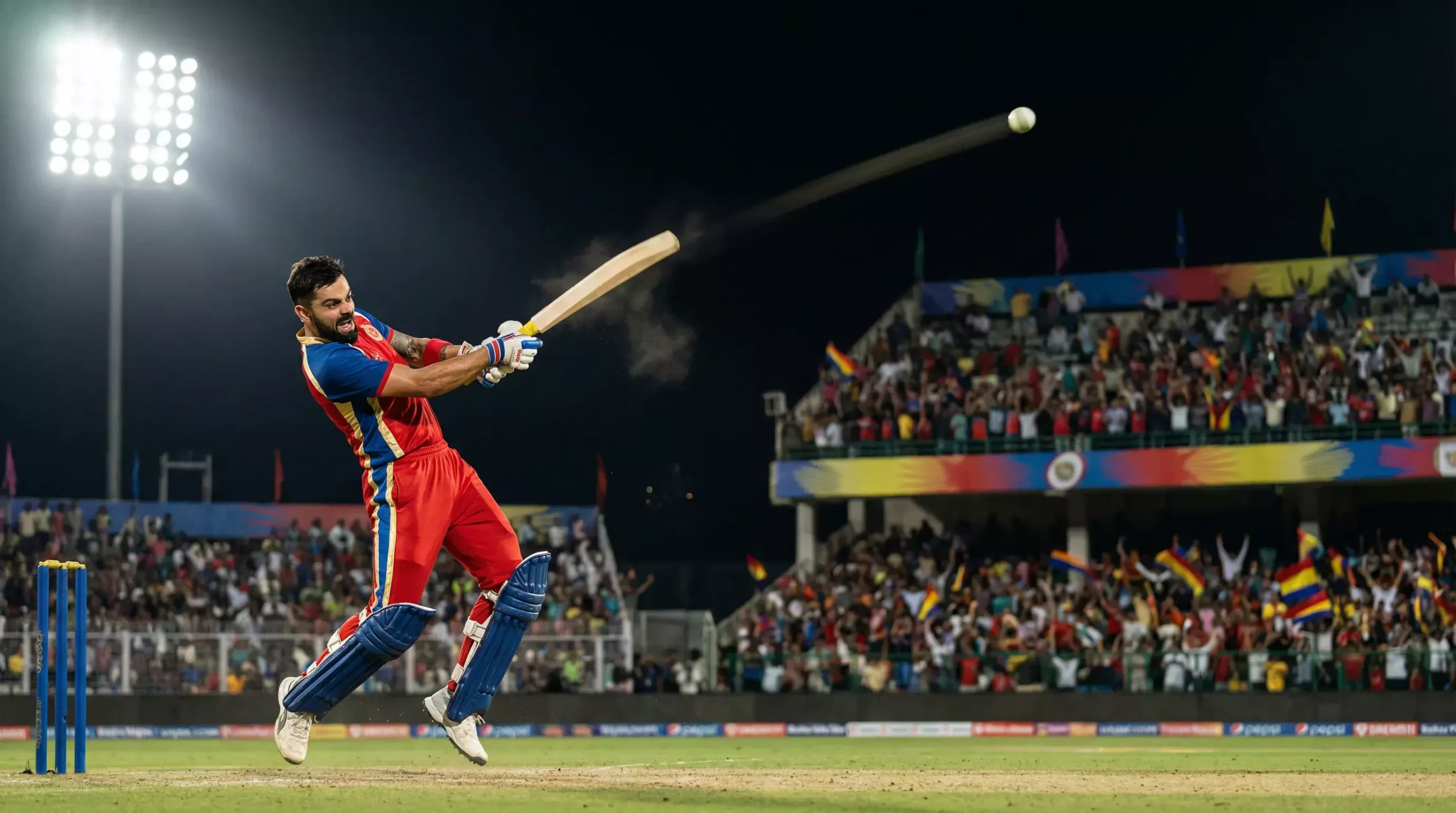
T20 cricket was built for chaos. Twenty overs per side, three hours of compressed action, and a format where a single over can flip the entire match. That volatility terrifies casual bettors and delights strategic ones, because where there is volatility, there is mispricing — and where there is mispricing, there is money.
Betting on T20 is not the same as betting on Test cricket or ODIs. The format demands a different analytical framework, a different understanding of momentum, and a different approach to risk. This guide covers the structural features of T20 that matter most for betting, and how to exploit them.
Exploiting T20 Cricket Volatility for Betting Opportunities
The compressed nature of T20 means small events carry outsized weight. A dropped catch in the sixth over of a Test match is a footnote. A dropped catch in the sixth over of a T20 can shift the win probability by ten or fifteen percentage points. This amplification effect applies to everything — a wide delivery, a misfield, a misjudged run-out attempt. Each incident moves the needle more than in longer formats because there is less time for regression to the mean.
For bettors, this volatility means pre-match odds are less sticky. In a Test match, the pre-match favourite usually remains the favourite throughout Day 1. In a T20, the pre-match favourite can become the underdog within five overs if the powerplay goes badly. This creates live betting opportunities that do not exist in longer formats, because the odds swing further and faster in response to on-field events.
The flip side of volatility is that T20 outcomes are harder to predict with precision. Win rates for favourites in T20 internationals hover around 55-60%, compared to 65-70% in ODIs and even higher in Tests played at home. That compressed win-rate gap means bookmaker margins matter more in T20 because the edge between a smart bet and a losing one is thinner. You need to be right more often or get better prices to compensate.
The Powerplay: Where T20 Bets Are Won and Lost
The first six overs of a T20 innings — the mandatory powerplay — are the highest-leverage betting phase. Fielding restrictions force only two fielders outside the 30-yard circle, which encourages aggressive batting and creates a scoring environment fundamentally different from the middle overs. Average T20I powerplay scores typically sit between 45 and 55 runs, but the range stretches from 20-odd collapses to 80-plus onslaughts.
Bookmakers set powerplay over/under run lines based on historical averages, venue data, and team tendencies. The edge comes from being more granular than the bookmaker. If you know that a specific opening pair has a powerplay strike rate of 160 against left-arm pace and the opposition opens with two left-armers, you have information that the line may not reflect. Similarly, overcast conditions that assist swing bowling at a particular ground can suppress powerplay scoring in ways that the generic venue average does not capture.
Powerplay wicket markets are equally important. The number of wickets falling in the first six overs influences the entire shape of the innings. If a team loses three wickets in the powerplay, they tend to shift into consolidation mode during the middle overs, depressing the final total. One or zero wickets lost typically correlates with higher totals and more aggressive batting in phases two and three. Tracking how specific bowling attacks perform with the new ball in T20 conditions is one of the most reliable analytical edges available.
Middle Overs: The Forgotten Phase
Overs 7 through 15 in a T20 get the least attention from both broadcast coverage and casual bettors, but they are where innings structure is actually built. The middle overs are where spin bowling dominates, run rates typically dip to 7-8 per over, and the batting side has to balance accumulation with occasional boundary hitting to keep the scoreboard moving.
For betting purposes, the middle overs are where certain market types come alive. Fall of next wicket lines during this phase tend to be more predictable because the scoring environment is more controlled. Spin bowlers who excel in the middle overs — especially wrist spinners who extract turn and bounce — generate wicket-taking opportunities that pure pace bowlers do not during this phase. If you follow the matchup data between specific batsmen and spin types, the middle-over period offers some of the most informative live betting reads in T20.
Team strategy also shifts in the middle overs based on the powerplay outcome. A team that lost early wickets will bat conservatively, targeting 130-140 and relying on bowlers. A team that raced to 60 without loss will push harder, targeting 180-plus. Recognising which mode a team is in — survival or acceleration — and how that mode affects the remaining-overs scoring projection is crucial for over/under totals set at the halfway mark of an innings.
The action of batting acceleration typically begins around over 13 or 14, when the set batsman starts targeting boundaries to transition into the death phase. This transition point creates a small window where run-rate markets tend to lag behind what is about to happen on the field, especially if the batsman has been deliberately conservative and the market has priced in a continuation of that approach.
Death Overs: High Risk, High Reward
The final five overs of a T20 innings are cricket’s equivalent of the fourth quarter in basketball — everything accelerates, stakes multiply, and the game is often decided in this window. Death-over scoring rates in T20 internationals regularly exceed 10 runs per over, with the best finishers capable of pushing that to 12 or 13 in high-pressure situations.
Betting on death-over run totals requires understanding the specific skill sets on both sides. Not all batting line-ups are equally equipped for the death. Teams with designated finishers — players whose role is to bat at number five or six and accelerate from ball one — produce more consistent death-over outputs than teams that rely on their top-order batsmen to bat through the innings. If a top-order player is still in at over 16 but has used up their acceleration gears, the death-over total is likely to underwhelm relative to the market line.
Death-over bowling is equally decisive. Yorker specialists and slower-ball exponents who can execute under pressure suppress scoring; bowlers who default to length deliveries in the slot get punished. The gap between the best and worst death-over bowlers in T20 cricket is enormous — economy rates can differ by 3-4 runs per over — and that gap directly translates to betting value in phase-specific markets. Knowing which bowler will deliver overs 17, 18, 19, and 20 is information that the market sometimes underweights, especially when a captain deviates from their usual death-over rotation.
Wide and no-ball frequency also spikes in the death overs due to the pressure of executing precise deliveries under duress. Extras markets during this phase offer a niche edge for bettors who track specific bowlers’ extras records in high-pressure situations. A bowler who averages 1.5 wides per death spell is a genuine statistical anomaly worth betting around.
Chasing vs Setting: The Toss and First-Innings Dynamics
T20 cricket has a well-documented chasing bias, particularly in night matches where dew affects second-innings bowling grip. Teams batting second in T20 internationals win more often than teams batting first, and this bias intensifies at certain venues. Grounds in the subcontinent — especially those hosting IPL evening games — show the strongest chasing advantage because dew makes the ball slippery and renders slower bowlers significantly less effective.
The first-innings total sets the market for the chase. Bookmakers adjust match odds at the innings break based on the posted score, but these adjustments are not always calibrated perfectly. A score of 165 on a ground that averages 155 looks above par on the surface, but if the chasing team has a batting line-up optimised for the conditions and the dew is expected to be heavy, 165 may actually be below the effective par score. Understanding venue-specific par scores and how they shift under conditions is where first-innings total assessment gets granular enough to generate a betting edge.
The toss market itself is a coin flip — literally — and offers no analytical edge. But the toss outcome impacts every other market, so having a pre-formed view on what happens if each team wins the toss and elects to bat or field is essential pre-match preparation. Most T20 captains choose to chase, but some grounds — Perth, for instance, or Johannesburg at altitude — produce conditions where batting first is genuinely advantageous. Knowing the exceptions matters.
Player Matchups and Form Cycles
T20 cricket produces enough data per season to support meaningful player-level analysis. Batting strike rates against specific bowling types — left-arm spin, right-arm pace, wrist spin — reveal matchup advantages that persist across tournaments. A batsman who averages 180 strike rate against leg-spin is a fundamentally different proposition in the top batsman market when facing a team that relies on two wrist spinners versus a team with a pace-heavy attack.
Bowling matchup data is equally actionable. Some bowlers have specific batsmen’s number — consistently getting them out or keeping them quiet — and this head-to-head record matters more in T20 than in longer formats because the sample of deliveries faced is smaller, magnifying any skill-based advantage. Platforms that provide ball-by-ball data make it possible to analyse these matchups at a level of detail that was unavailable even five years ago.
Form in T20 is real but short-lived. A batsman in peak form during an IPL season might carry that momentum through three or four matches before regression kicks in. Betting markets tend to overreact to recent form — pricing a player who has scored three consecutive fifties as if they will do it again indefinitely — and this overreaction creates opportunities on both sides. You can fade the hot hand when the price is inflated beyond what the underlying skill level supports, or back a quality player at enhanced odds during a brief lean stretch.
The Format Rewards Preparation, Not Prediction
T20 cricket resists prediction because it was designed to. The shortest format compresses so much variance into so little time that no model and no bettor can reliably forecast individual match outcomes at a high rate. What you can do is systematically identify situations where the odds do not reflect the underlying probabilities — and that requires preparation, not intuition. Build your process around powerplay analysis, death-over matchups, venue-specific par scores, and condition-adjusted team strengths. Let the market come to you with mispriced lines, and have the discipline to wait for them.
