
 Available in US
Big Bash League Betting: BBL Odds and Markets
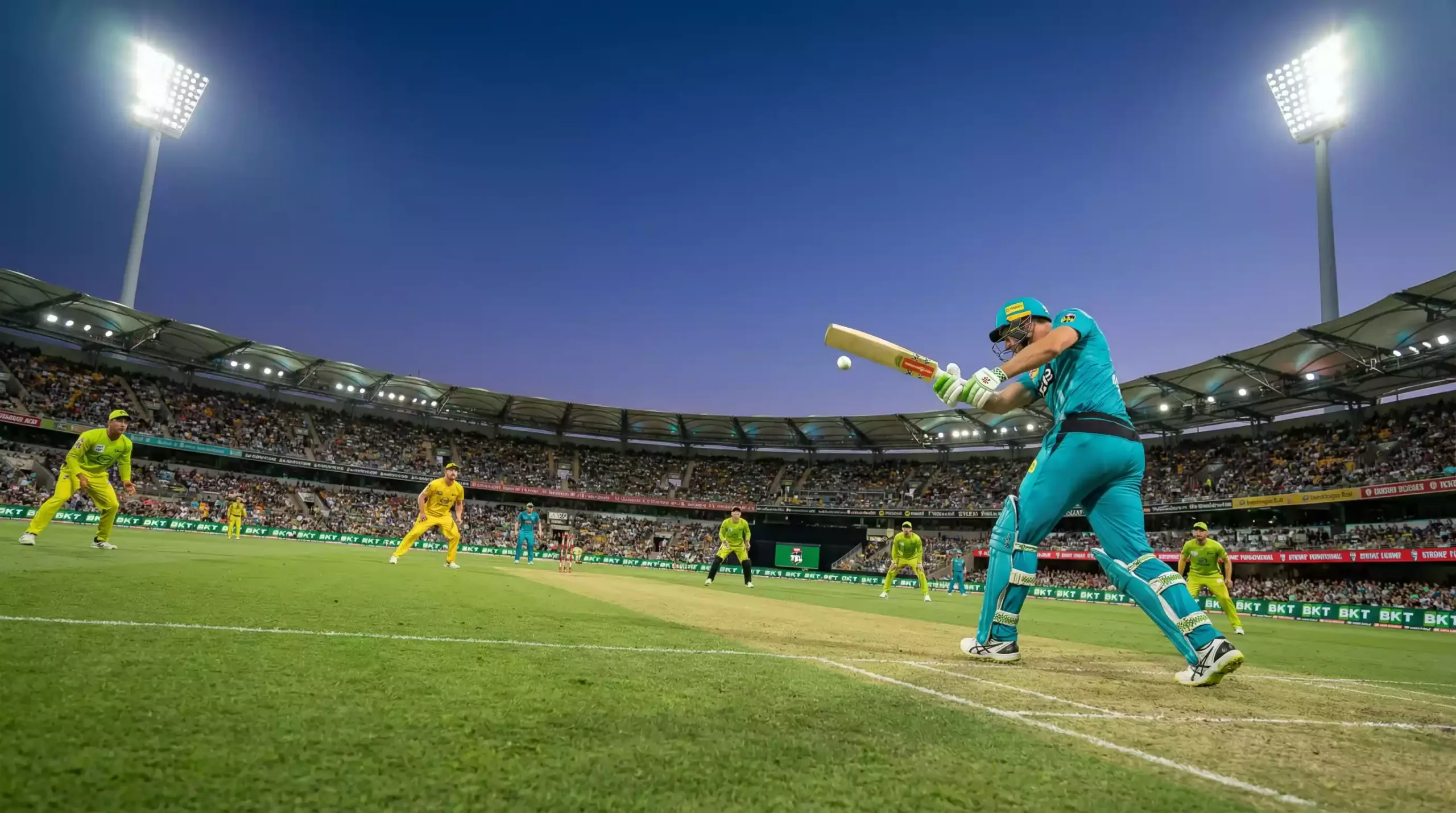
The Big Bash League occupies a peculiar niche in world cricket. It is not the richest T20 league — the IPL dwarfs it financially. It is not the most competitive — the Caribbean Premier League and Pakistan Super League both attract comparable international talent. But the BBL has something those leagues lack: an Australian summer schedule that fills the cricket calendar when most other leagues are dormant, a broadcast infrastructure that reaches global audiences, and a culture of entertainment-first cricket that produces gloriously unpredictable results. For bettors, that unpredictability is the entire point.
The BBL runs from December to February, overlapping with the Australian international summer, which means the best Australian players are frequently absent on national duty. This constant player turnover, combined with the league’s unique scheduling quirks and the diversity of Australian grounds, creates a betting landscape where surface-level analysis fails and deeper preparation thrives. If you approach the BBL with the same framework you use for the IPL, you will struggle. The league has its own rhythms, and this guide explains how to read them.
BBL Franchise Form and Squad Dynamics Analysis
BBL franchises operate under a salary cap that is modest by international T20 standards, which limits their ability to stockpile star players. The result is a league where squad depth matters more than individual brilliance, and where coaching and team culture play an outsized role in determining results. A well-coached BBL side with solid domestic players and one or two smart overseas signings can outperform a franchise that has spent its cap on a single marquee international who misses half the tournament through national commitments.
The availability puzzle is the biggest challenge for BBL bettors and the biggest source of value. Australian internationals move in and out of BBL squads based on the Test and ODI schedule. A franchise might lose its two best players midway through the tournament when they are called up for an international series, transforming a title contender into a middle-of-the-table side overnight. Tracking the Australian cricket schedule and anticipating which players will be available for which BBL matches is tedious work, but it is the single most impactful analytical edge you can develop for this league.
Overseas player slots add another dimension. Each BBL franchise typically carries a small number of international players, and the quality of these signings varies enormously. A franchise that secures a genuine T20 specialist — someone with IPL or CPL pedigree who is committed to the full tournament — gets a more reliable contribution than one that signs a bigger name for a limited window. The market tends to price overseas player impact based on reputation rather than availability commitment, which creates opportunities when a high-profile signing is only available for four matches while a lesser-known import will play the entire season.
Ground Dimensions and the BBL’s Unique Playing Conditions
Australian cricket grounds are among the most varied in the world, and this diversity shapes BBL betting in ways that have no parallel in other T20 leagues. The MCG, with its cavernous boundaries, produces completely different scoring patterns from the compact Bellerive Oval in Hobart or the tiny Manuka Oval in Canberra. A match at the MCG might see totals of 150 being competitive, while the same quality of cricket at Manuka could produce totals above 200.
These dimensional differences are critical for over/under runs markets and total sixes props. Bookmakers adjust their lines based on venue, but the adjustment is not always precise, particularly at grounds that host fewer BBL matches and have smaller sample sizes. Perth Stadium, which replaced the WACA as the BBL venue for the Perth Scorchers, plays differently from its predecessor — the pitches are flatter and the boundaries are slightly different — and historical WACA data is only partially relevant. Bettors who track venue-specific scoring trends for the current stadium configurations rather than relying on historical ground data have a genuine informational advantage.
The scheduling of BBL matches also creates unique conditions. Double-headers, where two matches are played at the same venue on the same day, mean the second match is played on a used pitch that may behave differently from the fresh surface used in the afternoon. Evening matches in the Australian summer bring dew into play, particularly at coastal venues like the SCG and Adelaide Oval. The combination of used pitches and dew can transform batting conditions between the first and second innings of an evening match, and the toss becomes more consequential than the market typically reflects.
Australian summers also deliver extreme heat that affects player performance in measurable ways. A BBL match played in 40-degree heat in Adelaide or Melbourne creates fatigue effects that accumulate through the innings, particularly for fast bowlers. Economy rates tend to rise and fielding standards decline in extreme heat, which can push totals higher than conditions-based models predict. Checking the match-day temperature forecast is a simple analytical step that adds genuine value to your BBL assessments.
BBL Markets and Odds Patterns
The BBL offers a solid range of betting markets, though the depth and liquidity are a step below the IPL. Match winner, top batsman, top bowler, over/under runs, and total sixes are the core markets available for every match, with some bookmakers offering additional props like highest individual score, most boundaries, and first-wicket method.
Match winner markets in the BBL are less efficiently priced than in the IPL, partly because the lower international profile means fewer sharp bettors are scrutinizing the odds. This is good news for prepared bettors: the analytical work required to identify mispriced matches is lower than in higher-profile leagues, and the edges, when they exist, tend to be larger. Teams playing without their Australian international players are the most common source of mispricing — the market sometimes adjusts slowly to squad changes announced close to the match, and a franchise missing its primary fast bowler or top-order anchor is a fundamentally different proposition from its full-strength version.
Top batsman and top bowler markets in the BBL carry higher variance than in the IPL because the overall standard of play is lower. When the skill gap between the best and worst players in a match is wider, individual performances become harder to predict, and the favorite in a player market wins less often than their price implies. This means that backing slight underdogs in BBL player markets — the second or third favorite rather than the outright top pick — has been a historically profitable approach. The second-tier player who is in good form and batting in a favorable position might offer odds of 6.00 or 7.00 while having a realistic probability not far below the favorite priced at 4.00.
Over/under runs markets in the BBL are the place where venue knowledge translates most directly into profit. The spread between high-scoring and low-scoring BBL grounds is among the widest in any T20 league, and bookmakers do not always calibrate their lines with enough precision to account for the specific conditions of a given match. A clear, still evening at the SCG with a flat pitch and heavy dew is a completely different scoring environment from a windy afternoon at Blundstone Arena with a two-paced surface, even if both are priced within a similar range. Your edge comes from knowing the venue intimately enough to distinguish between a generic 160-run line and one that should be 145 or 175 based on the match-specific conditions.
What Sets the BBL Apart from Other T20 Leagues
The BBL has several structural characteristics that differentiate it from other T20 competitions, and understanding these differences is essential for bettors transitioning from IPL or CPL analysis.
The league’s length is the first distinguishing factor. The BBL runs for approximately two months with each team playing 10 regular-season matches, which is a larger sample than most T20 leagues. This longer format means that early-season form is less predictive of final standings, and the tournament has a mid-season inflection point where teams that started poorly can recover. Outright winner markets in the BBL should be approached with more patience than in shorter leagues, and mid-season adjustments to outright bets can capture value that pre-tournament pricing missed.
The quality distribution across BBL squads is flatter than in the IPL, where the gap between the best and worst teams is often significant. In the BBL, any franchise can beat any other on a given night, and the regular-season standings are routinely tight. This parity means that match odds are often close to even, and the value for bettors lies in small edges rather than large mispricings. A 5% edge on a coin-flip match is less dramatic than a 15% edge on a heavy favorite, but it is just as profitable over a large sample, and the BBL’s lengthy season provides exactly the sample size needed to make marginal edges compound.
The playoff structure has changed multiple times in the BBL’s history, and the current format determines which teams qualify and how the finals series operates. Staying current with the playoff rules is essential for outright and qualification betting, because the structure directly affects which regular-season positions carry the most value. A format with a double-chance final for the top team is more forgiving than a straight knockout, and the market does not always adjust qualification odds to reflect structural changes in the playoff format.
The BBL Bettor’s Secret Weapon
The biggest edge available in BBL betting is embarrassingly simple: watch the matches. The BBL receives extensive television coverage in Australia but limited international broadcast attention, and the global betting market often prices BBL matches based on statistical models and team sheets rather than visual observation. A bettor who actually watches three or four BBL matches per week develops a feel for pitch behavior, player form, and team dynamics that no statistical model fully captures.
You will notice that a particular batsman has changed his stance and is struggling against short-pitched bowling. You will see that a franchise’s death bowling has deteriorated since their best fast bowler was called up for international duty. You will observe that a ground’s pitch is playing slower than usual because the curator has prepared a fresh strip after a run of high-scoring games. These observational edges are available to anyone with a broadcast subscription and the willingness to invest the time, and they are undervalued precisely because so few bettors in the global market are watching the BBL closely enough to notice them.
