
 Available in US
Weather Impact on Cricket Betting: Rain and Conditions
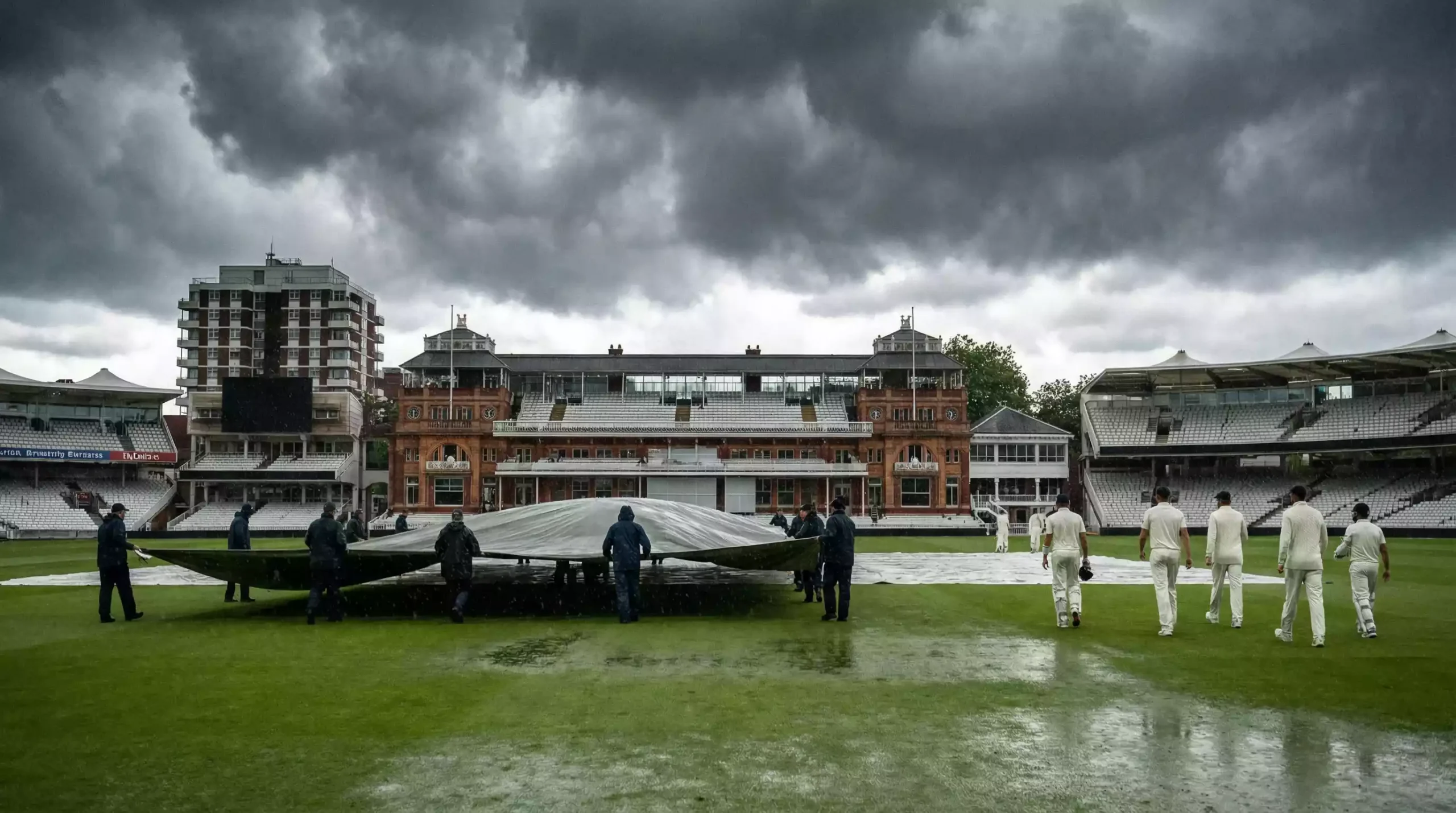
Cricket is the only major sport where the weather does not just affect playing conditions — it can fundamentally alter the rules of the contest. Rain delays trigger the Duckworth-Lewis-Stern method, which recalculates targets and can turn a comfortable chase into a desperate scramble or vice versa. Dew transforms the grip on the ball and the behavior of the outfield. Overcast skies create swing bowling conditions that did not exist an hour earlier under sunshine. For bettors, ignoring the weather forecast before a cricket match is like playing poker without looking at your cards.
This is not about checking whether it will rain and skipping the bet. Weather analysis for cricket betting is about understanding how specific conditions interact with the pitch, the teams, and the format to create opportunities that the market may not have fully priced. The bettor who understands weather’s impact on cricket has an edge that compounds across dozens of matches over a season.
Rain Interruptions and the DLS Betting Equation
Rain is the most obvious weather factor and also the most complex in its betting implications. A rain delay does not simply pause the match — in limited-overs cricket, it triggers the Duckworth-Lewis-Stern method, which recalculates the target for the chasing team based on resources (overs and wickets) remaining. Understanding DLS at even a basic level gives you a significant advantage in live betting during rain-affected matches, because most casual bettors have only a vague sense of how revised targets work.
The key principle of DLS is that wickets in hand are worth more when fewer overs remain. A team that is 100-1 after 20 overs of a 50-over match has different resource expectations than a team that is 100-5 at the same stage. If rain reduces the match to 35 overs per side, the DLS method adjusts the target to reflect not just the runs scored but the resources remaining. This creates situations where a team that appeared to be cruising suddenly faces a revised target that is proportionally harder, or — more commonly for sharp bettors — where a team that looked behind the rate is actually ahead on DLS.
Rain forecasts also affect pre-match markets in predictable ways. If rain is expected during the second innings, the team batting first gains a structural advantage because DLS par scores tend to protect the first-innings total. In extreme cases, if the first innings is completed but the second is washed out before reaching the minimum overs required for a result, the match is declared a no-result, and most bets are voided. This affects outright tournament markets in limited-overs competitions, where a no-result can be more damaging to one team’s qualification chances than a loss.
The betting opportunity around rain is not about predicting precipitation with precision — weather forecasts in cricket-playing countries are notoriously unreliable beyond a few hours. It is about understanding the asymmetric impact of potential rain on the two teams and identifying when the market has not adequately priced that asymmetry.
The Dew Factor in Day-Night Cricket
Dew is arguably the most underrated weather factor in cricket betting, particularly in the subcontinent and in day-night matches worldwide. As temperatures drop in the evening, moisture settles on the grass, making the outfield faster, the ball harder to grip for bowlers, and fielding more difficult. The practical effect is that batting becomes significantly easier under dew conditions, and bowling — especially spin bowling — becomes harder.
In T20 cricket and ODIs played under lights, the dew factor creates a measurable advantage for the team batting second. On a dew-affected ground, chasing teams benefit from a faster outfield that turns pushes into boundaries and a wet ball that bowlers struggle to control, particularly spinners who rely on finger grip to generate turn. Studies of IPL matches have shown that the win percentage for chasing teams increases measurably at venues where heavy dew is expected, and this effect has been consistent enough to be statistically significant over multiple seasons.
For bettors, the dew factor interacts with the toss in important ways. At dew-prone venues, winning the toss and choosing to bowl first is the default tactical decision, because it means your team will bat under the easier second-innings conditions. The market usually accounts for the toss result, but it does not always fully price the magnitude of the dew effect at specific venues. Chennai in April, for instance, produces heavier dew than Jaipur in March, and the impact on batting second is correspondingly larger. Venue-specific dew data is one of those niche informational edges that dedicated bettors can exploit.
The dew factor also affects specific player markets. Spinners who bowl during the dew-affected innings see their economy rates rise and their wicket-taking ability decline. If you are betting on top bowler in a day-night T20, the spinner bowling in the second innings is significantly less likely to take a match-leading number of wickets than the one bowling in the first innings, all else being equal. This is a straightforward adjustment that is not always reflected in player market pricing.
Overcast Conditions and Swing Bowling
Overcast skies are the weather condition that most directly affects how the cricket ball behaves in the air, and their impact on betting markets is both significant and frequently mispriced. When cloud cover is heavy and humidity is high, the Kookaburra and Dukes cricket balls swing more in the air, creating lateral movement that challenges even the best batsmen. This relationship between cloud cover and swing is well-established in cricketing wisdom, and while the atmospheric science behind it is debated, the on-field effect is undeniable.
The betting implications of overcast conditions are format-dependent. In Test cricket, an overcast first morning can be devastating for a batting side, particularly if the opposition has quality swing bowlers. James Anderson’s career statistics under cloud cover versus sunshine tell the story in numbers, but the principle applies to any seam-bowling attack. First-innings totals under heavy cloud tend to be lower, and the team winning the toss on an overcast morning almost always bowls first at venues in England, New Zealand, and South Africa. If the market has not fully adjusted for cloud cover arriving unexpectedly — say, a morning forecast of sunshine that turns overcast by the toss — there is a window of value.
In limited-overs cricket, overcast conditions matter most during the powerplay when the new ball is at its shiniest and the fielding restrictions allow swing bowlers to attack without the safety net of a packed off side. A team sending its best swing bowlers into the powerplay under cloud cover can create a wicket-taking advantage that reshapes the match. For over/under runs markets, unexpected cloud cover can push the first-innings total downward by 15-25 runs compared to clear conditions at the same venue, which is enough to create value on the under line.
One underappreciated aspect of cloud cover is its inconsistency within a single day. In countries like England and New Zealand, conditions can shift from sunny to overcast and back within a session. This means that the team bowling during the overcast spell gets a conditions advantage that the team bowling under sunshine does not share. For live bettors, tracking the cloud cover during a match and anticipating these shifts is a legitimate edge, particularly in Test cricket where the bowling conditions can change dramatically between the morning and afternoon sessions.
Extreme Heat, Humidity, and Wind
While rain, dew, and cloud cover get the most attention, other weather variables quietly influence cricket outcomes in ways that matter for betting. Extreme heat, high humidity, and strong winds each affect player performance and match dynamics in distinct ways.
Temperatures above 35 degrees Celsius create physical stress that accumulates over the course of a day’s play. Fast bowlers lose pace and accuracy as fatigue sets in, fielding standards decline in the afternoon sessions, and batsmen’s concentration can waver during long innings. In Test cricket, extreme heat tends to flatten the contest — bowlers lack the energy to sustain hostile spells, and matches drift toward draws or high-scoring affairs. The betting adjustment is subtle but real: on very hot days, pace bowlers are less likely to dominate, death-bowling execution deteriorates in T20 cricket, and the under line on bowler wicket counts can offer value.
High humidity without cloud cover creates an interesting paradox. Humid conditions can promote conventional swing even without overcast skies, though the effect is less pronounced. More importantly for betting, humid conditions affect the ball’s surface. A sweaty cricket ball is harder for spinners to grip and easier for fast bowlers to reverse swing when it gets older. In the subcontinent, where humidity levels can exceed 80% during certain seasons, the ball deteriorates differently than in dry conditions, and bowlers who specialize in reverse swing gain an advantage in the middle and death overs that dry-weather analysis would not predict.
Wind is the most overlooked weather variable in cricket betting. Strong crosswinds affect the flight of the ball, making it harder for spinners to control their length and easier for batsmen to hit with the wind. At grounds with an exposed end — and many international venues have one — the bowler bowling into the wind faces a measurably harder task. This affects top bowler markets, because the bowler assigned to the downwind end has a structural disadvantage that is rarely reflected in individual pricing. In limited-overs cricket, strong winds also affect boundary counts: shots hit with the wind carry further, while shots hit against it die in the outfield. This directly impacts total sixes and over/under runs markets at exposed venues.
Your Personal Weather Station
Here is an edge that costs nothing and takes five minutes: bookmark a reliable weather radar for the cities hosting matches you bet on. Not the generic forecast — the actual radar that shows precipitation movement in real time. The difference between knowing “30% chance of rain this afternoon” and seeing a rain band 20 kilometers away moving toward the ground at 15 kilometers per hour is the difference between a probability and actionable information.
Before every match, check three things: the hourly forecast for the match window, the radar for incoming precipitation, and the dew point temperature for evening matches. The dew point tells you whether dew will form and roughly when — anything above 18 degrees Celsius in the subcontinent virtually guarantees heavy dew by 8 PM local time. This three-check routine takes less time than reading a match preview, and the information it provides is more directly connected to betting value than most of the analysis you will find in pre-match write-ups.
