
 Available in US
Live Cricket Betting: In-Play Wagers and Strategy
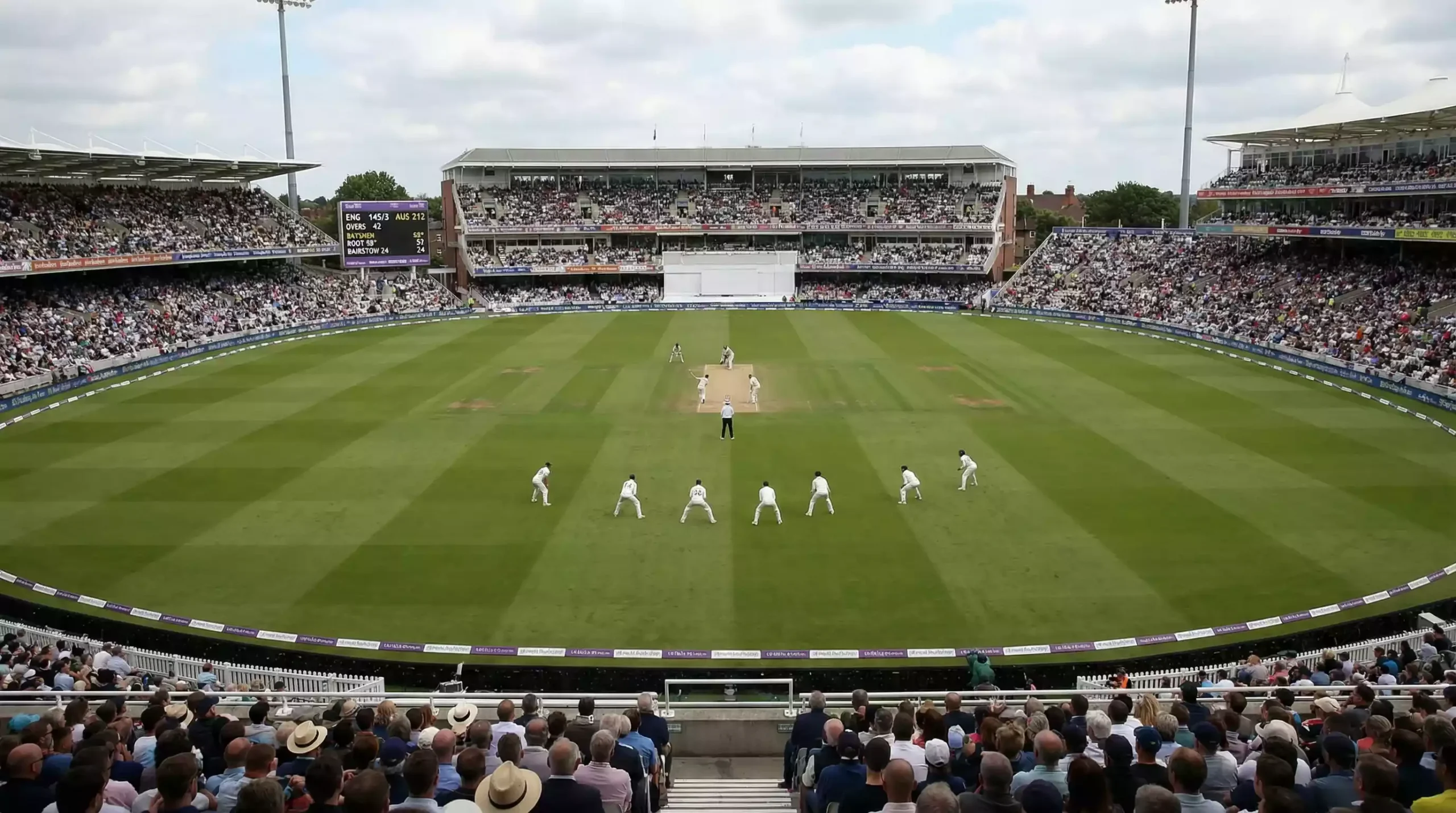
Cricket might be the best sport on earth for live betting, and it is not even close. Where football gives you 90 minutes of relatively low-scoring action and tennis oscillates between two players, cricket delivers hundreds of discrete events per match — every ball is a potential market mover. A wicket falls, and odds shift. A boundary clears the rope, and the run-rate equation changes. Rain clouds gather on the horizon, and the entire match dynamic recalibrates. For bettors who can process information quickly and think in probabilities rather than emotions, in-play cricket betting offers a rich, constantly evolving landscape.
But live betting also punishes the undisciplined more ruthlessly than pre-match wagering. Odds move fast, emotional reactions lead to impulsive bets, and the sheer volume of betting opportunities can drain a bankroll if you lack a framework. This guide builds that framework, covering the mechanics of in-play cricket betting, format-specific strategies, and the timing patterns that separate profitable live bettors from the rest.
In-play momentum can shift rapidly, especially when you factor in how weather affects cricket betting during unexpected rain delays.
Differences Between Live and Pre-Match Cricket Betting
Pre-match betting is a prediction exercise. You analyze available information, form an opinion on likely outcomes, and place your bet before the first ball. Live betting is a reaction exercise layered on top of real-time analysis. The information set changes constantly, and the skill lies not in predicting what will happen but in recognizing when the market has mispriced what is happening right now.
This distinction matters because the cognitive demands are different. Pre-match analysis can be done at your own pace with spreadsheets, historical data, and careful deliberation. In-play betting requires rapid decision-making under uncertainty, with the added pressure of watching odds fluctuate in real time. The temptation to chase a moving market or reverse a position after a bad ball is constant, and yielding to it is the single most common way live bettors lose money.
The structural advantage of live cricket betting, however, is that bookmakers must update hundreds of markets simultaneously during a match. Their algorithms are sophisticated but not infallible, and they are particularly vulnerable during moments of rapid change — a cluster of wickets, a sudden rain delay, a batting collapse that shifts the expected total by 40 runs in two overs. These are the moments when live odds lag behind reality, and where prepared bettors find genuine value.
Momentum Shifts and When to Strike
Cricket is a sport of momentum swings, and recognizing these swings before the market fully prices them is the core skill of in-play betting. A new batsman walking to the crease after a wicket creates a brief window of vulnerability — both for the batting side and in the odds. The market knows a wicket has fallen, but it cannot fully price the specific matchup between the new batsman and the current bowler, the pressure of the situation, or the psychological state of the batting team.
Powerplay overs in limited-overs cricket are momentum amplifiers. A strong powerplay pushes batting-side odds lower, but the question is whether the market overreacts to a fast start. A team scoring 55 for no loss in the first six overs of a T20 looks dominant, but historical data shows that powerplay scoring does not correlate as strongly with final totals as most bettors assume. The middle overs often tell a different story, and the market sometimes prices the powerplay too heavily into its projections.
Death overs represent another predictable momentum shift. In T20 and ODI cricket, the final five overs of an innings produce the most volatile scoring. A batting side that is 130-3 after 15 overs of a T20 could finish anywhere between 170 and 210 depending on how the death overs unfold. Bookmakers set projected totals during this phase, but the variance is so high that both the over and under can represent value depending on the specific bowlers and batsmen involved.
Format-Specific In-Play Approaches
Live betting in Test cricket bears almost no resemblance to live betting in T20s, and treating them similarly is a costly mistake. Each format has its own rhythm, and your in-play strategy needs to match it.
Test cricket unfolds over five days, which means live betting opportunities are spread across sessions rather than concentrated in a two-hour window. The key inflection points in Test matches are the new ball, the transition between sessions, and the deterioration of batting conditions as the pitch wears. Session betting — wagering on runs scored or wickets taken within a specific session — is one of the most exploitable markets in Test cricket because conditions within a session are relatively predictable once you have observed the first 20-30 minutes of play.
ODI cricket offers a middle ground. The 50-over format has distinct phases — powerplay, middle overs, death overs — that create natural betting windows. The most valuable in-play moments in ODIs often occur around the 30-35 over mark, when the batting side decides whether to consolidate or accelerate. This decision point reshapes the match’s trajectory, and the market sometimes takes an over or two to fully adjust to the tactical shift.
T20 cricket is the format where live betting is most popular and most volatile. Matches last roughly three hours, odds swing dramatically on individual deliveries, and the pace of play means you have seconds rather than minutes to assess a betting opportunity. Discipline is paramount in T20 live betting — having pre-identified scenarios where you will bet, rather than reacting to every ball, is the difference between a structured approach and gambling on adrenaline.
Reading Odds Movements in Real Time
Live cricket odds are not just numbers flickering on a screen — they are a compressed representation of the market’s collective assessment of match probability. Learning to read these movements, rather than just react to them, is what elevates your live betting from guesswork to analysis.
Sharp odds movements — sudden, significant shifts — typically indicate that something has happened or is about to happen that the market has priced in before you noticed. A wicket, a rain forecast, a fielding change that signals an aggressive tactical shift. When you see odds move sharply without an obvious on-field trigger, resist the urge to follow the money blindly. Instead, investigate the cause. The movement might reflect insider-level information from someone who spotted the rain radar before you did, or it might be a single large bet from a whale that temporarily distorts the market.
Gradual odds drift, by contrast, usually reflects a slow accumulation of evidence. If a batting team’s match odds have been drifting longer over the past three overs without any wickets falling, it often means the run rate is quietly falling behind the required pace. These slow drifts are where patient bettors find value, because the market is adjusting incrementally while the underlying situation may have shifted more decisively than the odds suggest.
The spread between different bookmakers’ live odds is also informative. When most books agree on a price, the market is confident. When live odds diverge significantly across platforms, it signals uncertainty — and uncertainty is where edges live. Cross-referencing two or three different live betting platforms gives you a richer picture of the market’s confidence level at any given moment.
Session Breaks as Strategic Inflection Points
One of the most overlooked features of cricket for live bettors is the structured break system. Lunch and tea intervals in Test cricket, innings breaks in all formats, and strategic timeouts in T20 leagues all create natural pauses in the action. These breaks are not dead time — they are information-processing windows that give you an advantage over algorithms that price odds based on ball-by-ball flow.
During an innings break, the first-innings total is known and the market sets second-innings odds based on historical chase rates at the venue, the bowling attack’s recent form, and the pitch’s behavior during the first innings. But the market cannot fully account for everything you might have observed while watching — the pitch doing more than expected off a length, a key bowler looking slightly off rhythm in warm-ups, or dew beginning to settle on the outfield as the evening progresses. These observational edges are real, and the innings break gives you time to process them before odds settle.
Strategic timeouts in T20 leagues serve a similar function on a smaller scale. The brief pause between the sixth and ninth overs, and again between the thirteenth and sixteenth overs, gives you a moment to reassess. How has the pitch played in the powerplay? Is the required rate climbing faster than the batting side’s acceleration pattern suggests? These micro-windows of reflection are when the best live bettors place their most considered wagers.
In Test cricket, the overnight break between days is the richest strategic inflection point. Conditions can change dramatically overnight — a crack develops in the pitch, weather shifts from dry to overcast, a bowler reports a niggle. Day-two morning odds often carry residual pricing from day one that does not fully reflect how conditions have evolved. The first hour of each day’s play is disproportionately important in Test match betting, and the overnight break is when you should be doing your deepest analysis.
Common Live Betting Mistakes and How to Avoid Them
The most damaging live betting mistake is not picking the wrong side — it is betting too often. The constant stream of events in cricket creates a psychological pull toward continuous action. Every ball feels like an opportunity, and the dopamine hit of placing a bet during an exciting passage of play is genuinely addictive. Setting a strict maximum number of live bets per match before the game starts is crude but effective.
Chasing losses in real time is the second killer. You back a team that loses two quick wickets, the odds blow out, and the temptation to double down at the new, longer price feels rational in the moment. Sometimes it is rational. More often, it is emotional reasoning dressed up as analysis. A useful rule of thumb: if you are increasing your stake on a live bet to recover a previous live loss within the same match, stop and skip the bet entirely.
Ignoring the context of live odds is another common error. A team might be offered at attractive odds during a middle-overs lull, but those odds reflect a real probability decline that you are underestimating because you watched them dominate the powerplay. The market has a short memory by design — it prices the current state, not the highlight reel. Your job is to determine whether the current state or the broader trajectory better represents the true probability, and bet only when you have genuine conviction that the market is wrong.
The 30-Second Rule
Here is a practical discipline that will improve your live betting results immediately: wait 30 seconds after identifying a potential in-play bet before placing it. Not 30 seconds of staring at the screen willing the odds to hold — 30 seconds of active assessment. Ask yourself three questions during that half-minute. First, why do I think the market is wrong? If the answer is just a feeling, skip it. Second, is this bet consistent with my pre-match analysis or am I being swept up by in-match narrative? Third, would I still want this bet at odds 10% shorter? If no, the value case is too thin. This small pause filters out a remarkable number of impulsive bets and keeps your live betting focused on genuine opportunities rather than adrenaline-driven action.
Track live scores and find the most competitive in-play odds on our top cricket betting platform.
